5 Advanced Water Purification Systems and the Atmospheric Water Generator
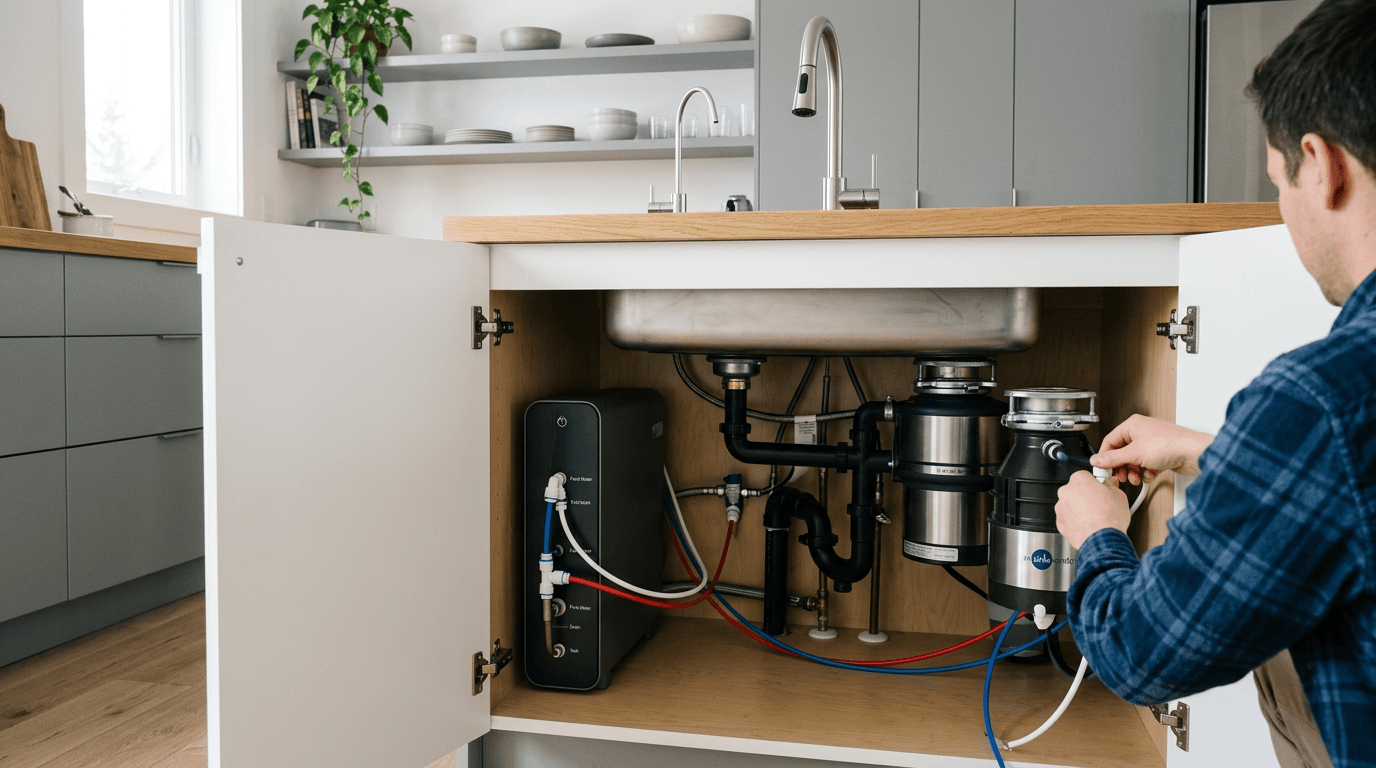
Many homeowners assume that dealing with hard, chlorinated municipal water simply means replacing a plastic pitcher filter every month or ignoring the scale buildup entirely. In reality, the mineral density and chlorine levels typical of municipal supplies often overwhelm standard consumer-grade filters within weeks. As residents seek better alternatives to bottled water and fragile pitcher filters, the market has shifted toward heavier-duty, integrated solutions. Today, emerging technologies range from the experimental, such as a residential atmospheric water generator, to highly refined tankless reverse osmosis setups.
Selecting the right approach requires understanding exactly what each technology removes, how much space it demands, and what it costs to operate year-round. This guide breaks down the mechanisms, the trade-offs, and the honest limits of five advanced treatment trends.
Quick Summary
Modern water purification systems move beyond basic carbon filtration to target specific municipal water challenges, using processes ranging from reverse osmosis to atmospheric condensation. The right system depends entirely on your home's water profile, available space, and tolerance for ongoing maintenance.
- Atmospheric generators pull moisture from the air but struggle in dry winter climates.
- Tankless reverse osmosis systems provide high-purity water without sacrificing under-sink cabinet space.
- Distillers offer absolute purity but at a steep energy and time cost.
- Whole-home dechlorination removes chemical tastes at every tap but does not reduce water hardness.
- Smart dispensers monitor filter life and water usage but rely heavily on proprietary cartridges.
Table of Contents
- How to Compare These Systems
- Technology Comparison Table
- 1. Atmospheric Water Generators
- 2. Tankless Reverse Osmosis Systems
- 3. Home Water Distillers
- 4. Smart Countertop Dispensers
- 5. Whole-Home Dechlorination Tanks
- Which System Fits Your Home
- FAQ
- Recommended Reads
How to Compare These Systems
Evaluating these technologies requires a strict lens: operating environment, contaminant removal, and maintenance burden. A system that works flawlessly in a humid coastal city may fail completely in a dry prairie winter. Similarly, equipment designed exclusively for drinking water will not protect your home's plumbing from scale.
Every item below is judged on how it manages the specific challenges of municipal water - particularly the 165 mg/L average hardness and distinct chlorine profile found in Edmonton municipal water supplies.
Technology Comparison Table
| Technology | Primary Mechanism | Best For | The Honest Limit |
|---|---|---|---|
| Atmospheric Generator | Condensation | Off-grid setups, humid climates | Fails in dry winters; high electricity usage. |
| Tankless RO | Semi-permeable membrane | Under-sink drinking water | Requires an electrical outlet under the sink. |
| Home Distiller | Boiling and condensation | Medical-grade purity needs | Very slow production; flat taste. |
| Smart Dispenser | Multi-stage countertop filters | Renters, small apartments | Expensive, proprietary replacement filters. |
| Dechlorination Tank | Catalytic carbon bed | Whole-house chlorine removal | Does not soften water or remove minerals. |
1. Atmospheric Water Generators
An atmospheric water generator (AWG) is a standalone appliance that extracts drinking water directly from the ambient air. It is designed for environments where the municipal supply is either non-existent or completely compromised, appealing to off-grid enthusiasts and those seeking total independence from city infrastructure.
The mechanism resembles a dehumidifier. It utilizes a robust filtration system. First, the unit pulls in ambient air. Chilled coils drop the temperature below the dew point to collect condensation. Because this water is stagnant and potentially contaminated by airborne particles, a pump pushes it through sediment filters, carbon filters, and ultraviolet (UV) light chambers to ensure it is safe to drink.
High purity, staggering energy costs
The resulting water is highly purified, containing virtually zero dissolved solids. Because it bypasses the municipal pipes entirely, you avoid the chlorine, chloramines, and calcium that plague city water.
However, the honest limit of an AWG is its absolute dependence on high humidity and warm temperatures. In places like Edmonton, Leduc, or Sherwood Park, indoor humidity during the winter plummets. When ambient humidity drops below 30%, these machines simply stop producing water. Even in ideal conditions, the energy required to run the compressor makes the cost per litre significantly higher than traditional filtration. If you live in a dry climate and need reliable daily hydration for a family, an AWG is the wrong tool for the job.
2. Tankless Reverse Osmosis Systems
Tankless reverse osmosis (RO) systems represent the modern evolution of under-sink water purifiers. They are designed for homeowners who want premium drinking water but cannot sacrifice half their lower cabinet space to a bulky storage tank.

A tankless RO uses an internal electric booster pump. It avoids storing water in a pressurized bladder. When you open the dedicated faucet, the pump forces cold tap water through the semi-permeable membrane at high pressure. This produces purified water on demand. The system typically includes a sediment pre-filter and a carbon block to remove chlorine. It also features the RO membrane itself, followed by a remineralization stage to add healthy calcium and magnesium back into the water.
Practical rule: Always measure the distance to the nearest electrical outlet before purchasing a tankless RO system. Unlike traditional tank-based setups, the internal booster pump requires continuous 120V power to operate.
Maximum filtration, minimal footprint
By incorporating setups like the Triton Pure Tankless package, reverse osmosis installations in Edmonton can effectively strip out heavy metals, fluoride, and total dissolved solids without dominating the cabinet. The continuous flow means you never run out of purified water while filling a large pot for pasta.
These systems require an under-sink electrical outlet, a feature missing in many older Canadian homes. The high-pressure pump also generates a noticeable humming noise when running. If your sink sits on an island in an open-concept living space, this vibration and sound can be disruptive. Neglecting regular, specific filter changes (pre-filters every 6-12 months, membranes every 2-3 years) will also cause the pump to burn out against a clogged membrane.
3. Home Water Distillers
A home water distiller is a countertop appliance that mimics the natural water cycle to achieve near-perfect purity. It is primarily for individuals with specific medical requirements, those using CPAP machines, or users who want absolute certainty that zero dissolved solids remain in their glass.
The system works by boiling tap water in a stainless steel boiling chamber. As the water turns to steam, it leaves all heavy metals, minerals, and most chemicals behind in the boiling pot. The steam rises, travels through a cooling corridor (usually a coiled tube with a fan blowing across it), and condenses back into liquid water, dripping slowly into a glass or BPA-free collection jug. A small carbon sachet at the spout catches any volatile organic compounds that might have vaporized alongside the water.
Absolute extraction, impractical volume
A distiller guarantees that almost nothing survives the process, delivering clinical-grade purification. It requires no complex installation or plumbing modifications.
Operating a distiller is highly inefficient. Producing a single four-litre jug requires roughly four to six hours of continuous heating and fan operation, leading to substantial electricity costs. Because the process strips out dissolved oxygen and natural minerals, the resulting water has a flat taste. You must also manually scrub hardened scale out of the boiling chamber weekly, which is a tedious chore in hard-water regions like Beaumont where water softeners are already required to manage scale buildup.
4. Smart Countertop Dispensers
A smart water dispenser for home use is a freestanding countertop unit combining multi-stage filtration with digital monitoring and temperature control. It targets renters, apartment dwellers, or office workers who want filtered, chilled, or boiling water instantly without modifying their plumbing.
These units feature a removable reservoir. You fill it from the tap. Internal pumps push the water through proprietary, quick-change filter cartridges. These typically combine sediment screens, activated carbon, and sometimes a low-pressure RO membrane. The "smart" component comes from integrated flow meters and TDS (Total Dissolved Solids) sensors. These sensors track exactly how much water has passed through the system. They alert you via an app or an LED screen when it is time to order a replacement filter.
Convenient tracking, proprietary lock-in
The primary advantage is convenience. You get instant hot water for tea or chilled water for drinking, and the digital interface removes the guesswork from filter maintenance.
Ongoing ownership costs run high due to proprietary consumables. Users must buy specific filters directly from the manufacturer at a premium price. Should the company discontinue the model or close down, the dispenser becomes an unusable plastic brick. Small reservoirs also mean large families must carry the heavy tank to the sink for refills multiple times a day.
5. Whole-Home Dechlorination Tanks
A whole-home dechlorination system is a large, point-of-entry tank installed where the main water line enters the house. It is designed for homeowners who hate the smell and taste of municipal chlorine but do not want the pressure drops associated with whole-house cartridge filters.
Inside the fiberglass tank sits a large bed of catalytic activated carbon. As city water flows upward through the media, the carbon adsorbs chlorine, chloramines, and volatile organic compounds. Because the tank automatically backwashes itself using a digital control valve, the carbon bed is regularly fluffed and cleaned, preventing channeling.
Practical rule: Never install a carbon dechlorination tank after a water softener. Carbon tanks should always be the first stage in your utility room to strip the chlorine out before it can degrade the resin beads inside your softening equipment.
Comprehensive chemical removal, zero softening
This is the definitive solution for skin irritation caused by municipal disinfectants. A proper whole-home dechlorination setup in Edmonton means every shower, bathtub, and sink delivers water free of chemical odors. In systems like the Triton Pure package, the carbon media lasts for years without requiring weekly cartridge swaps.
Carbon media does absolutely nothing to reduce water hardness. It cannot stop calcium scale from destroying water heaters, nor can it remove dissolved heavy metals or fluoride. For those dealing with crusty faucets and stiff laundry in areas like Leduc where softening is essential, a dechlorination tank alone cannot solve the problem. Plumbing protection requires pairing this system with an ion-exchange softener.
Which System Fits Your Home
Matching the technology to your specific bottleneck prevents wasted money and frustration.
If your primary complaint is the taste of your drinking water and you have an electrical outlet under the sink, a tankless reverse osmosis system offers the best balance of purity and flow rate.
If you are off the grid in a humid environment and cannot rely on well water, an atmospheric water generator provides a unique, albeit expensive, lifeline.
If your skin is dry and itchy after showering and your entire house smells like a public pool, point-of-use filters will never keep up. You need a whole-home dechlorination tank installed at the main line to treat the water before it reaches your bathrooms.
If you require absolute, medical-grade purity for equipment and only need a few litres a day, a home water distiller is the reliable, slow-paced choice.
FAQ
Do these purification systems remove the need for a water softener?
No. Water purification systems (like RO or carbon filters) target chemicals, tastes, and heavy metals. They do not remove the high volumes of calcium and magnesium that cause hard water scale. For scale prevention, you still need an ion-exchange water softener.
Why does my atmospheric generator produce less water in the winter?
These machines rely entirely on extracting humidity from the ambient air. During Canadian winters, indoor heating drastically reduces relative humidity. When there is less moisture in the air, the condenser has less water to harvest.
Can a tankless reverse osmosis system connect to my fridge?
Most tankless RO systems are not designed to supply refrigerators. Because they rely on a booster pump that activates only when the dedicated faucet is opened, they struggle to provide the sustained, pressurized flow required by a refrigerator's internal ice maker valves.
How often do I need to change the media in a whole-home dechlorination tank?
Unlike small filter cartridges that need changing every few months, a large automatic backwashing carbon tank typically lasts between 5 and 10 years before the catalytic carbon bed becomes exhausted and requires replacement.