7 Types of Small Water Softeners for Apartments and RVs
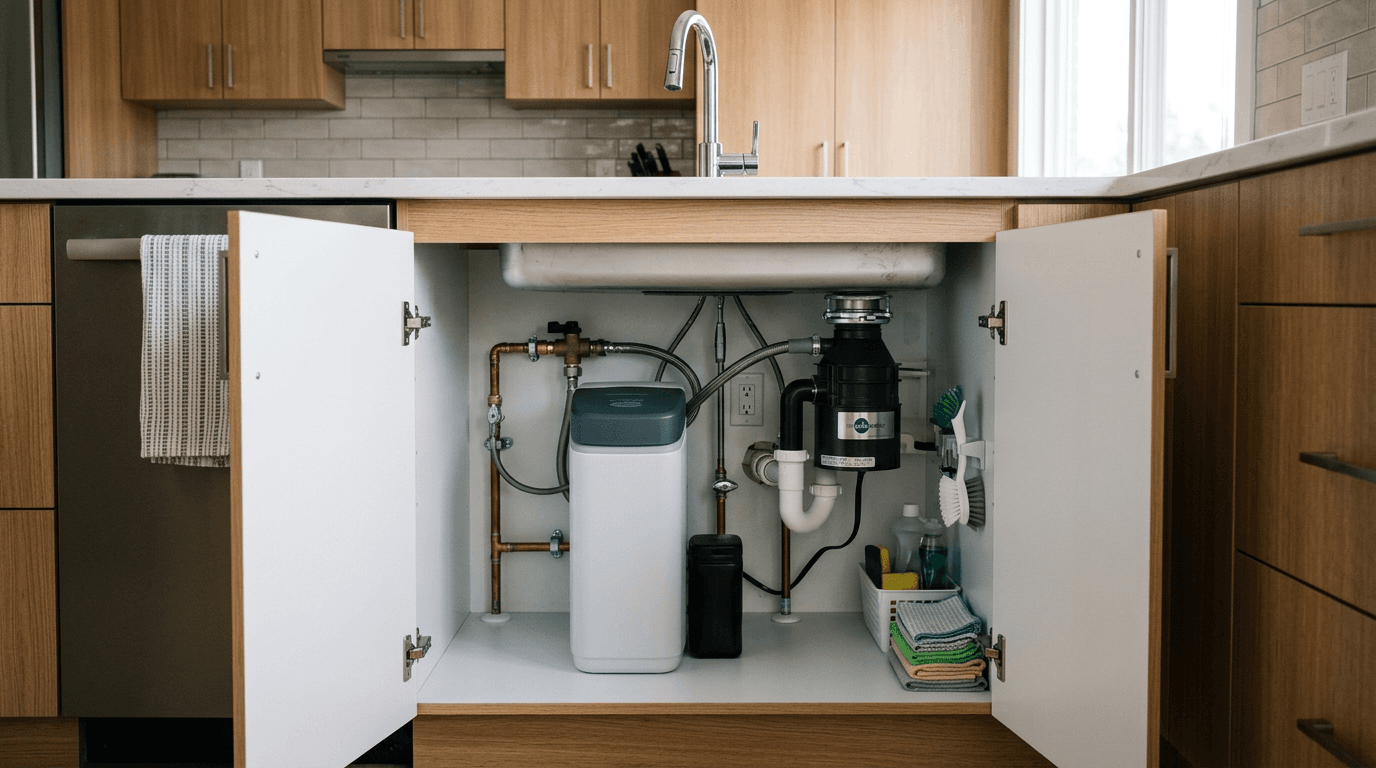
Opening the bypass valve on a newly installed plumbing line beneath a cramped kitchen sink, only to realize the standard twin-tank system you bought blocks access to the shut-off completely, is an expensive mistake. Fitting a small water softener into tight residential footprints is a geometric problem before it is a plumbing one. The hard water characteristic of the North Saskatchewan River easily damages fixtures, but protecting a 600-square-foot suite or a travel trailer requires a different approach than a sprawling suburban basement. Understanding local water composition is critical, whether you are sizing a system for downtown or researching a water softener in Beaumont.
Quick Summary
A small water softener reduces calcium and magnesium in water while operating within heavily restricted spatial footprints, relying on condensed ion-exchange resin or cartridge filtration. Selecting the right compact unit depends on comparing available plumbing access against the required flow rate.
- Cabinet-style units merge resin and salt tanks vertically to save floor space.
- Point-of-use cartridges swap automatic regeneration for disposable media.
- Travel setups rely entirely on manual salt flushes.
- Tankless packages utilize internal booster pumps to save under-sink space.
Table of Contents
- How to Measure Compact Softening Systems
- 1. Cabinet-Style Ion Exchange Systems
- 2. Point-of-Use Under-Sink Cartridges
- 3. Inline Hose-Driven Systems
- 4. RV-Specific Travel Units
- 5. Wall-Mounted Tankless Softening Packages
- 6. Miniature Twin-Tank Configurations
- 7. High-Capacity Showerhead Filters
- Matching Your Floorplan to the Right Equipment
- FAQ
- Recommended Reads
How to Measure Compact Softening Systems
A standard residential softener requires a dedicated brine drum and a separate resin cylinder, occupying four to five square feet of floor space. Small living spaces force a compromise: you must either collapse that geometry by combining tanks or change the regeneration mechanism entirely. Every alternative approach changes how water flows and how maintenance is handled. The units detailed below are measured by their footprint penalty, their regeneration requirements, and the specific limitations placed on their flow rate. What works in a static mechanical room will fail in a moving trailer, and what suits a single sink will starve a whole household.
1. Cabinet-Style Ion Exchange Systems
A cabinet-style compact water softener merges the resin and brine tanks into a single rectangular plastic enclosure. It is engineered for smaller detached homes or townhouses built with main-floor utility closets instead of dedicated mechanical rooms.
The system pulls incoming hard water through a bed of negatively charged styrene-divinylbenzene resin beads exactly like a traditional system. The mechanical difference is strictly geometric: the pressurized resin tank sits directly inside the salt reservoir. When the electronic control valve triggers a backwash and regeneration cycle, it draws liquid brine from the immediate surrounding jacket rather than a distant external drum.
Excellent space efficiency masks a difficult maintenance profile
The electronic control valve sits directly above the salt supply inside an enclosed, humid box. Consequently, circuitry corrodes quickly. Furthermore, salt bridging is notoriously difficult to break up. This occurs when a hard crust forms above the water line, tricking the user into thinking the tank is full. Access to the lower brine pool is restricted. If you are fitting a utility closet and need a water softener in Leduc, a cabinet model undeniably saves floor space. However, you trade away easy internal cleaning.
Practical rule: When measuring a utility closet for a cabinet softener, add a minimum of eight vertical inches to the manufacturer's specified height to ensure you can actually tip a standard bag of salt into the lid without hitting the ceiling.
2. Point-of-Use Under-Sink Cartridges
Finding a functional apartment water softener usually means abandoning whole-home coverage and targeting a single cold-water line, usually under the kitchen sink. This approach is ideal for renters who cannot legally cut into the building's main plumbing stacks.
Instead of a backwashing resin bed, this system pushes water through a disposable plastic cartridge filled with a fixed volume of ion-exchange media. Hard minerals are trapped inside the housing as water flows straight through to the faucet. Because there is no drain line or brine tank, the resin cannot be regenerated in place. Once the media is exhausted, the housing must be unscrewed and the entire cartridge replaced with a new one.
Renter-friendly installation at a steep ongoing cost
The physical limit of a 10-inch cartridge means it depletes rapidly in highly mineralized municipal water. It protects the coffee maker and the kitchen tap, but it provides zero protection for the shower, the dishwasher, or the washing machine. Anyone seeking whole-home protection will find the ongoing cost of replacement filters far exceeds the price of a permanent installation. You should check the flow rate rating on your kitchen faucet before buying; a restrictive cartridge will drop cold water pressure to a slow trickle.
3. Inline Hose-Driven Systems
A portable water softener built as a single, standalone fiberglass tank with standard garden hose inlet and outlet threads serves a highly specific function. It is engineered for car detailing, window washing, or temporary setups where permanent plumbing is impossible.
These units lack electronic control heads and drain lines entirely. Water pressure from the source hose forces water down the distributor tube and up through the resin bed. Because there is no automated timer or dedicated brine tank, the user must manually trigger regeneration. This involves physically disconnecting the inlet hose, pouring standard iodized table salt directly into the top opening of the tank, and running a very slow trickle of water to flush the dissolved brine down the drain.
Manual regeneration demands a patient operator
Without a metered valve, you have no automated way to know when the resin is exhausted until you notice hard water spots returning on the glass. The regeneration process takes roughly forty-five minutes of manual supervision. It is strictly a batch-processing tool. Using it for continuous domestic supply means committing to weekly, hands-on salt flushes, making it completely unviable as a permanent household fixture. Time your manual flushes with a watch; running the rinse water too fast will push the brine out before it can clean the resin.
4. RV-Specific Travel Units
When sizing a water softener for RV travel, physical stability matters as much as resin capacity. RV units are built shorter and wider to maintain a low centre of gravity in a moving storage bay. They are designed for seasonal travelers hooking up to varied municipal and well water sources across different campgrounds.
Similar to the inline detailing systems, these rely on manual regeneration. However, they feature a wider base cylinder and specialized high-flow internal distributor screens to handle wild fluctuations in campground water pressure. The wider footprint prevents the tank from tipping over during transit, and heavy-duty brass inlet fittings resist stripping from the constant threading and unthreading of campsite hoses.
Rugged construction trades away maximum capacity
To keep the unit light enough to physically lift out of a storage compartment, the internal resin capacity is severely restricted. A typical unit holds only 16,000 grains, requiring manual regeneration every week or two for a couple living on the road full-time. If you leave it connected outside during freezing temperatures, the expanding ice will shatter the fiberglass casing instantly. You must blow out the lines with an air compressor before any winter travel.
Practical rule: Never use coarse rock salt in a manual travel softener; the insoluble dirt and debris present in lower-grade salt will permanently foul the internal distributor screen, and the unit lacks the automated high-pressure backwash required to force it out.
5. Wall-Mounted Tankless Softening Packages
This is a combined approach using a highly compact primary softener paired with a tankless reverse osmosis unit, engineered for modern, space-constrained kitchens. This combined approach is how our Triton Pure and Triton Pure Tankless packages operate, aimed at residents prioritizing high-purity drinking water without surrendering cabinet space.

Instead of storing purified drinking water in a bulky pressurized bladder tank under the sink, the tankless RO uses an internal electric booster pump to force water through the semi-permeable membrane precisely when the faucet is opened. When integrated into a package alongside a miniature whole-home softener, the softener strips the calcium at the main line to protect the RO membrane from scaling, allowing the under-sink unit to maintain peak efficiency at a fraction of the traditional size.
On-demand purification relies on stable electrical power
A tankless RO requires a dedicated power outlet under the sink to run the high-pressure pump. If the electrical power goes out, you lose access to purified drinking water immediately, whereas a traditional tank system would still hold a few litres in reserve. Furthermore, the high-flow pump generates a noticeable hum whenever the faucet is engaged. For those looking at a reverse osmosis system installation in Edmonton, checking the cabinet for a 120V receptacle is the first mandatory step.
6. Miniature Twin-Tank Configurations
A scaled-down version of a traditional system utilizes a slim 8-inch resin tank paired with a narrow 11-inch square brine tank. Aimed at smaller houses needing a water softener in Sherwood Park that have a mechanical corner but lack the square footage for standard 18-inch salt drums.
It operates identically to a full-sized setup, keeping the electronics safely separated from the corrosive salt environment. The miniature brine tank holds roughly half the salt of a standard bin, meaning more frequent refills, while the 8-inch diameter resin tank maintains just enough surface area to handle typical two-person water consumption.
Separation of tanks preserves the lifespan of the control valve
The footprint is still significantly larger than a cabinet model. More critically, the narrow resin tank restricts the maximum flow rate to around seven gallons per minute. If you attempt to run a shower, the dishwasher, and the washing machine simultaneously, the water velocity will push past the resin beads too quickly. This channeling effect allows hard water to bleed through the system unsoftened. You must calculate your household's peak flow rate before installing a slim tank.
7. High-Capacity Showerhead Filters
An inline cylindrical attachment that screws directly between the bathroom wall pipe and the showerhead. It is designed heavily for renters specifically targeting dry skin or hair damage caused by heavily treated municipal water.
These units rarely contain actual ion-exchange resin because they cannot be regenerated. Instead, they use kinetic degradation fluxion (KDF) media and activated carbon blocks to strip out free chlorine and heavy metals as the water passes through. By removing the harsh chemical disinfectants used by the city, the water feels markedly softer on the skin and hair, even though the calcium and magnesium hardness minerals technically remain in solution.
Chemical reduction is marketed as softening
This is a chemical filtration tactic, not true softening. It will not stop hard scale from forming on your glass shower doors, and it provides absolutely no protection for your home's hidden plumbing infrastructure. It is a highly localized comfort measure that must be unscrewed and replaced every three to six months as the carbon block saturates with chlorine. Check if your municipality uses chlorine or chloramine; standard carbon blocks struggle to process chloramine efficiently.
Matching Your Floorplan to the Right Equipment
Choosing the correct system is a matter of acknowledging hard limits on space and plumbing access. If your bottleneck is under-sink space in a rental condo where you cannot cut the main line, a point-of-use cartridge will protect a single faucet, provided you accept the frequent replacement costs. If you are moving a travel trailer across varying campground water sources, a rugged RV-specific manual unit protects the trailer's internal plumbing from scaling, though it requires hands-on salt flushes. For homeowners with a dedicated utility closet seeking whole-home protection without a massive footprint, a miniature twin-tank preserves the lifespan of the electronics far better than an integrated cabinet style, provided the household flow rate does not overrun the narrow resin bed.
FAQ
Can I install a compact water softener in a condo without strata approval?
Point-of-use under-sink cartridges and showerhead filters generally do not require strata approval because they attach to existing, exposed fixture threads. Any system that requires cutting the main water line, altering the drain plumbing, or installing a permanent bypass valve will require prior authorization from the building board.
Do portable units require a permanent drain connection?
No. Inline hose-driven and RV-specific travel units rely on manual regeneration. You disconnect the outlet hose and run a trickle of water out onto the ground or into a temporary bucket to flush the salt through the resin. They are completely detached from municipal drain infrastructure.
How do I know what size system my apartment needs?
Before selecting a unit, securing free in-home water testing in Edmonton will confirm exactly how many grains of hardness your water contains. You multiply that hardness number by your daily water usage to determine if a miniature tank can handle the load, or if it will require regeneration too frequently to be practical.