7 Types of Water Filtration Systems for Modern Homes (2026)
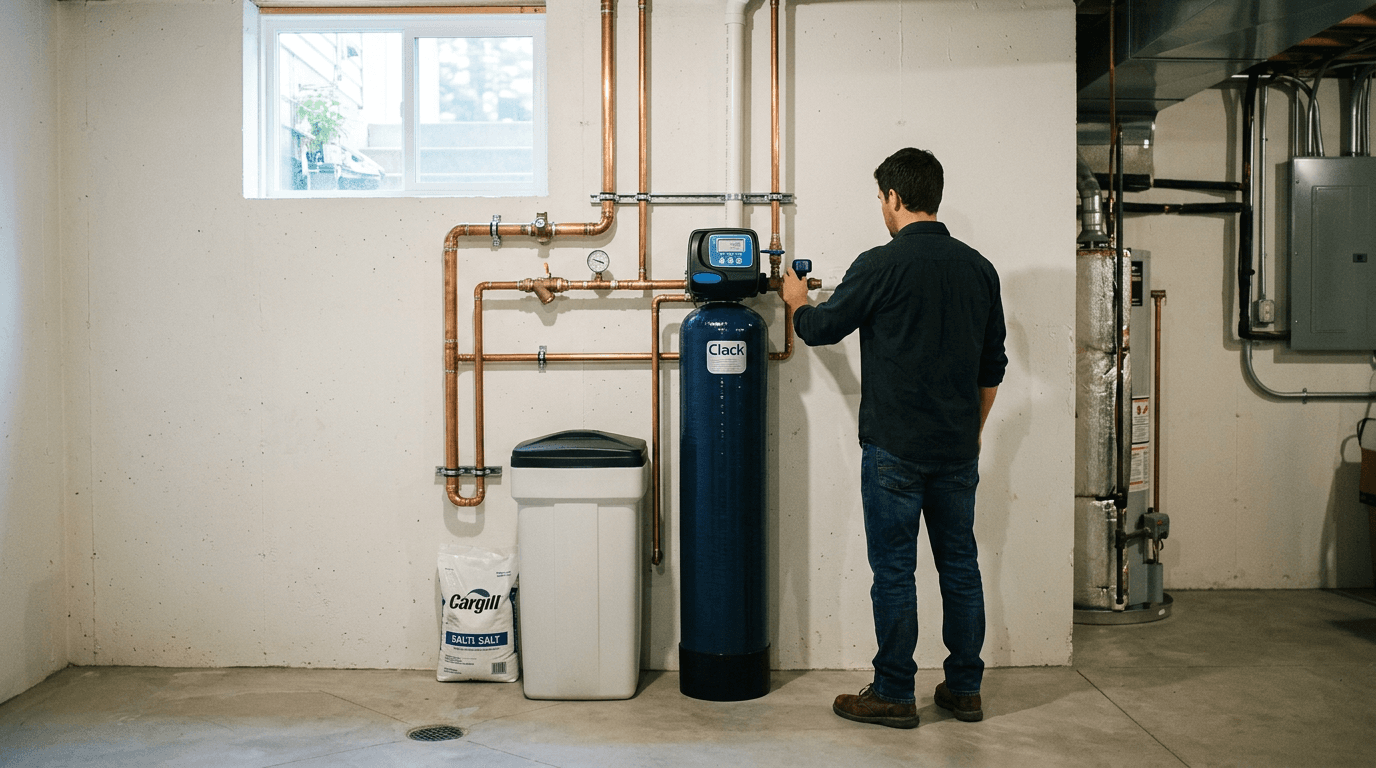
You notice it the moment you fill a glass from the kitchen tap in Edmonton: that distinct, sharp scent of municipal chlorine. Or perhaps you see it on the showerhead, where chalky white scale builds up no matter how often you scrub it. These are not just aesthetic annoyances; they are specific chemical and mineral realities of your local water supply. Navigating the different types of water filtration systems requires understanding exactly what is in your water and what you want to remove. We will compare these systems based on two strict criteria: the specific contaminants they target and the ongoing maintenance they demand from the homeowner.
Quick Summary
Choosing the right water treatment home system depends entirely on your specific water chemistry. There is no single filter that removes everything without significant trade-offs in cost, space, or maintenance.
- Water Softeners: Remove hard minerals to protect plumbing, but do not filter chemicals.
- Carbon Filters: Eliminate chlorine taste and odour, but ignore dissolved minerals.
- Reverse Osmosis: Provide bottled-quality drinking water at a single tap.
- UV Purifiers: Neutralize bacteria in well water, requiring perfectly clear water to function.
Table of Contents
- 1. Ion Exchange Water Softeners
- 2. Whole-Home Dechlorination Systems
- 3. Under-Sink Reverse Osmosis (Tank Systems)
- 4. Tankless Reverse Osmosis Systems
- 5. Ultraviolet (UV) Purification Systems
- 6. Iron and Manganese Oxidation Filters
- 7. Sediment Pre-Filters
- How to Choose Among Water Treatment Solutions
- FAQ
- Recommended Reads
1. Ion Exchange Water Softeners
Water softeners are designed for homes dealing with hard water scale that ruins appliances, dries out skin, and clogs plumbing. In the Edmonton capital region, where city water hardness averages 165 mg/L (about 9.6 grains per gallon), this is typically the foundational piece of any residential water treatment setup.
The mechanism relies on a process called ion exchange. The system contains a tank filled with negatively charged resin beads. As hard water flows through, positively charged calcium and magnesium ions stick to the beads. The system releases a tiny amount of sodium ions in exchange, effectively softening the water. Once the resin is saturated, the system flushes the beads with a brine solution to regenerate them, sending the trapped hard minerals down the drain.
Excellent at scale prevention, ignores chemical contaminants
The honest limit of a water softener is that it is not a traditional filter. It does absolutely nothing to remove chlorine, chloramines, lead, or pesticides. If your primary complaint is the taste or smell of your tap water, a softener alone will leave you disappointed. Furthermore, homeowners on a strict low-sodium diet should be aware of the trace sodium added during the exchange process, though it is usually minimal.
Practical rule: Never install a UV purifier or a fine reverse osmosis membrane downstream of hard water without a softener in place first; the hard minerals will rapidly scale the UV sleeve and blind the RO membrane.
2. Whole-Home Dechlorination Systems
Whole-home dechlorination tanks are for households that want shower water and tap water completely free from the chemical smells and drying effects of municipal chlorine. They are installed at the point of entry, meaning every fixture in the house benefits from the treatment.
These water filtration systems utilize granular activated carbon (GAC) or catalytic carbon. Rather than acting as a physical sieve, the carbon works through adsorption. The massive surface area of the porous carbon grabs and holds chlorine molecules and volatile organic compounds (VOCs) as the water passes through the media bed. Because they use a large tank rather than a small cartridge, these systems can process high flow rates without dropping household water pressure.
High volume aesthetic improvement, incomplete purification
Carbon dechlorination targets a narrow range of water issues. While it excels at removing the chemicals that cause bad tastes and odours, it allows dissolved minerals, heavy metals like lead, and total dissolved solids (TDS) to pass straight through. It will not stop hard water scale from forming on your fixtures. If you live in an area with high hardness, a carbon tank is best paired with a softener.
3. Under-Sink Reverse Osmosis (Tank Systems)
Traditional under-sink reverse osmosis (RO) systems are dedicated drinking water stations for families who want bottled-water quality directly at the kitchen tap. They are point-of-use systems, treating water for consumption rather than for the whole house.
Reverse osmosis works by using your home's water pressure to force water through a semi-permeable membrane at the molecular level. This membrane rejects nearly all dissolved solids, including heavy metals, fluoride, and trace pharmaceuticals. Because this process is extremely slow, the purified water is stored in a small pressurized holding tank under the sink, ensuring you have a steady flow when you open the dedicated RO faucet.
Unmatched purity, significant space requirements
The primary drawback is the physical footprint. The storage tank and the multi-stage filter manifold will consume roughly half of your under-sink cabinet space. Additionally, traditional RO is a wastewater-heavy process; to keep the microscopic pores of the membrane clean, the system uses water to flush the rejected contaminants down the drain, often at a ratio of three or four gallons of wastewater for every one gallon of purified water produced.
4. Tankless Reverse Osmosis Systems
Tankless RO systems provide high-efficiency drinking water purification for modern kitchens where under-sink storage space is at a premium. They are the upgraded alternative to traditional tank systems, often bundled into comprehensive water treatment systems like the Triton Pure Tankless package, which combines whole-home softening with premium point-of-use drinking water.

Instead of relying entirely on ambient house pressure, tankless systems utilize an internal electric booster pump. This pump forces water through a much larger, high-capacity membrane on demand. When you turn on the tap, the system purifies the water in real time, eliminating the need for a bulky storage tank and significantly reducing the amount of wastewater sent to the drain.
Continuous flow and compact, reliant on electricity
Tankless RO systems cannot function without a continuous electrical supply. You must have an available power outlet under your sink to run the internal pump. If the power goes out, your purified drinking water stops. They also carry a higher upfront equipment cost compared to traditional tank models, though the saved cabinet space and reduced water waste often justify the premium for busy homeowners in Leduc or Sherwood Park.
5. Ultraviolet (UV) Purification Systems
Ultraviolet purification systems are designed almost exclusively for rural properties, acreage owners, or homes on private wells that are vulnerable to bacterial or viral contamination. Municipal water is already treated with chlorine, making UV largely redundant for city residents.
The system consists of a stainless steel chamber housing a high-intensity UV-C lamp encased in a clear quartz sleeve. As water flows through the chamber, the ultraviolet light penetrates the cells of microorganisms like E. coli, Giardia, and Cryptosporidium. The UV energy scrambles their DNA, rendering them completely sterile and unable to reproduce or cause infection.
Highly effective sterilizer, requires perfectly clear water
UV light is a sterilizer, not a filter. It does not remove dissolved minerals, heavy metals, or chemical odours. More importantly, UV requires high water clarity to function. If your well water has high turbidity (cloudiness), sediment, or iron, those particles will cast microscopic shadows. Bacteria can hide behind these shadows, surviving the trip through the UV chamber. You must heavily pre-filter the water before it reaches the UV lamp.
6. Iron and Manganese Oxidation Filters
Iron and manganese filters are specialized water treatment solutions for homes outside city limits dealing with aggressive red, brown, or black stains on plumbing fixtures and laundry. If you pull well water in rural Beaumont and notice your whites turning orange, this is the required intervention.
Dissolved (clear water) iron cannot be caught by a standard sediment filter. These systems work by injecting oxygen into the water as it enters the tank, forcing the dissolved iron and manganese to oxidize and turn into solid particulate rust. The water then passes through a specialized media bed (such as Birm or Greensand) that traps the rust particles. Periodically, the system backwashes to flush the accumulated iron down the drain.
Stops aggressive staining, demands precise calibration
These systems are severe overkill for municipal water. Their limit lies in their strict operational requirements: they demand a specific pH range and a high flow rate from your well pump to backwash properly. If your pump cannot push enough water to lift and clean the heavy media bed during the regeneration cycle, the filter will foul, solidify, and fail completely.
7. Sediment Pre-Filters
Sediment pre-filters are the first line of defense for homes pulling water that contains visible sand, silt, rust flakes, or organic debris. They are typically installed immediately where the water line enters the house, acting as a shield for the more delicate (and expensive) water filtration systems downstream.
These filters function as a simple physical sieve. They use either a pleated paper cartridge, a spun-bonded polypropylene core, or a reusable stainless steel mesh to block particles. They are rated in microns; a 50-micron filter catches large sand, while a 5-micron filter catches fine silt.
Essential equipment protection, high maintenance frequency
A sediment filter does not alter water chemistry. It will not soften water, remove chemicals, or kill bacteria. Regular maintenance is unavoidable: if your water source carries a heavy sediment load, the filter cartridge will blind over quickly, resulting in a severe drop in household water pressure until you physically go to the basement, unscrew the housing, and replace the filter.
Practical rule: Always install sediment filter housings with a bypass valve and pressure gauges on both the inlet and outlet sides. When the outlet pressure drops significantly below the inlet pressure, you know exactly when it is time to change the cartridge without guessing.
How to Choose Among Water Treatment Solutions
Selecting the right system means matching the technology to your specific household bottleneck.
If your primary issue is appliance failure, chalky buildup on shower doors, and dry skin, your bottleneck is hardness. A standard ion exchange softener is the correct response. If you are a homeowner inside the Edmonton city limits who hates the smell of chlorine in the shower but also wants to protect your plumbing, you need a combination approach. Bundles like the Triton Pure packages address both issues by pairing a softener with advanced carbon dechlorination or RO filtration.
If you live on a rural property and your water test shows coliform bacteria, a UV system is non-negotiable, but you must pair it with sediment and iron pre-filtration to ensure the light actually hits the pathogens. Never buy a system designed for well water if you live on a municipal supply, and never expect a softener to purify your drinking water.
FAQ
What is the difference between water softening and water filtration?
Water softening specifically targets and removes calcium and magnesium ions to prevent scale buildup and protect plumbing. Water filtration refers to removing or reducing chemicals, particulates, or biological contaminants (like chlorine, lead, or bacteria) to improve water safety and taste.
Can a whole-home filter make tap water safe to drink?
A whole-home carbon filter removes chlorine and improves taste, but it does not remove heavy metals, fluoride, or dissolved solids. For true bottled-water purity at the tap, a point-of-use reverse osmosis system is required.
How often do I need to maintain a reverse osmosis system?
Standard maintenance involves changing the pre-filters every 6 to 12 months to protect the core technology. The RO membrane itself typically lasts 2 to 3 years before requiring replacement, depending on your home's water usage and initial water quality.
Do I need an iron filter if I am on city water?
No. Municipal water treatment facilities already remove iron and manganese before the water is distributed to homes. Iron filters are exclusively for properties drawing from private wells.