8 Types of Well Water Filtration System Technologies Compared
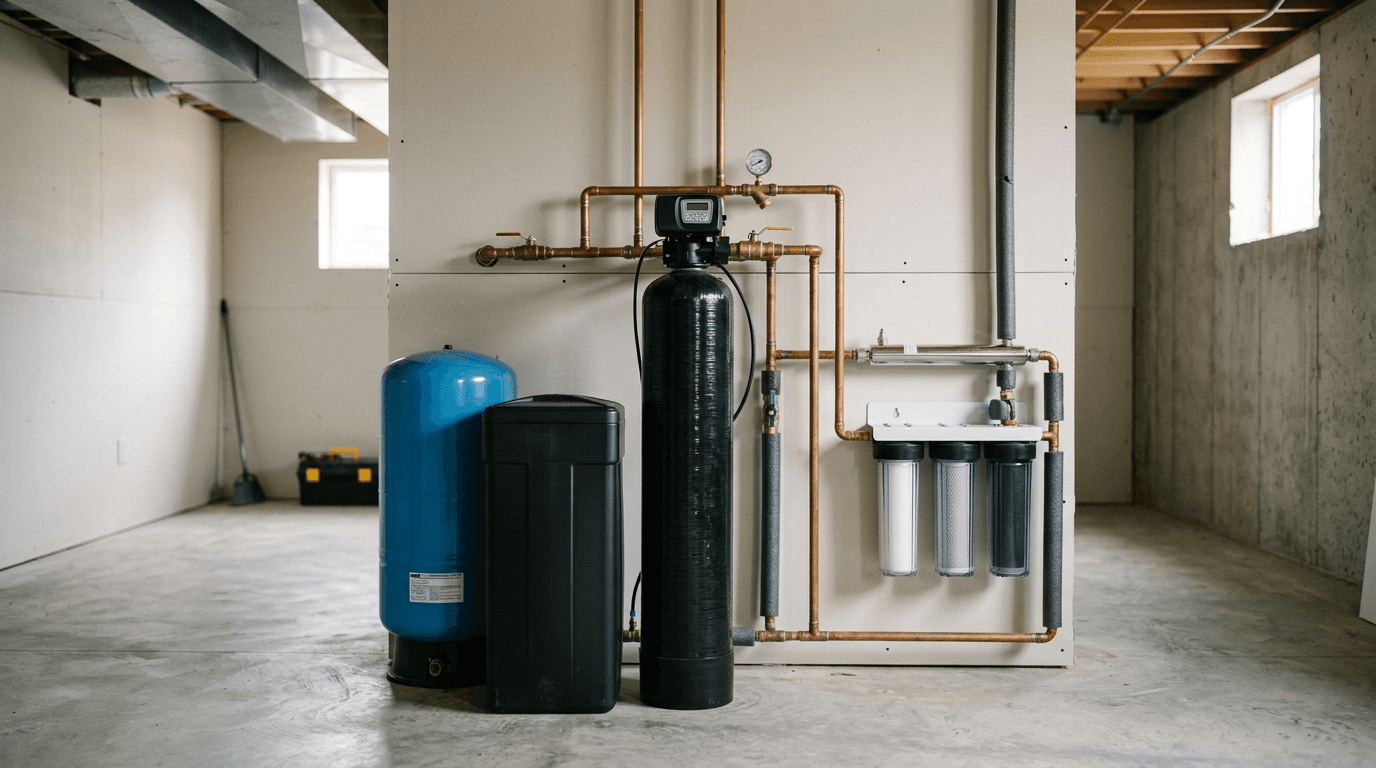
Pulling a glass of water from a newly drilled well outside Leduc, expecting pristine groundwater, only to watch it smell like sulfur and stain the sink orange within a week is a jarring reality of rural acreage living. A well water filtration system is rarely an optional upgrade; it is the mechanical barrier protecting your plumbing from aggressive, mineral-dense groundwater. When evaluating well water treatment systems, the deciding criteria must always be your specific water chemistry profile - specifically the parts per million (PPM) of dissolved iron and hardness - and your well pump's flow rate in gallons per minute (GPM). Choosing equipment based on marketing rather than these specific metrics leads to choked water pressure and fouled media beds. We evaluate the primary technologies based on what contaminants they intercept and how heavily they tax your well's mechanical capacity.
Quick Summary
A well water filtration setup is a sequenced arrangement of mechanical and chemical barriers designed to remove heavy metals, extreme hardness, and biological threats from private groundwater sources. The exact configuration depends entirely on the well's specific contaminant profile and flow rate.
- Ion exchange softens water but fails under heavy iron loads.
- Air injection handles moderate dissolved iron and sulfur without chemicals.
- Reverse osmosis requires extensive pre-treatment to survive well water.
- System sizing is dictated by the well pump's backwash capability.
Table of Contents
- 1. Ion Exchange Water Softeners
- 2. Air Injection Oxidation Iron Filters
- 3. Greensand Plus Manganese Systems
- 4. Reverse Osmosis Setups
- 5. Combined Softening and Purification Packages
- 6. Ultraviolet Purification Reactors
- 7. Centrifugal Spin-Down Sediment Separators
- 8. Hydrogen Peroxide Injection Units
- System Comparison Table
- Matching Your Well Water Profile to the Right Setup
- FAQ
- Recommended Reads
1. Ion Exchange Water Softeners
For rural properties dealing with extreme calcium and magnesium loads that dwarf municipal levels, an ion exchange tank is the foundational component of the utility room. A standard well water softener is engineered specifically to protect downstream plumbing and appliances from aggressive scale buildup that can destroy a hot water heater in a matter of months.

The mechanism relies on a pressure vessel filled with polystyrene resin beads carrying a negative charge. These beads are saturated with sodium (or potassium) ions. As hard groundwater flows through the resin bed, calcium and magnesium ions - which possess a stronger positive charge - knock the sodium ions off the beads and take their place. Once the resin is fully saturated with hard minerals, the control valve initiates a backwash and regeneration cycle, flooding the tank with a heavy brine solution to force the calcium down the drain and reset the resin. When planning a water softener installation in Edmonton or surrounding rural areas, assessing the required resin capacity and cross-link percentage is critical for long-term durability.
Handles extreme hardness, struggles with heavy iron
The fundamental limit of ion exchange is its vulnerability to iron. While a softener can theoretically remove small amounts of ferrous (clear water) iron, relying on it to do so is a mechanical error. If your well produces more than 2 PPM of iron, the iron will permanently coat the resin beads, preventing them from exchanging ions. The system will lose its softening capacity entirely, requiring a complete resin replacement far ahead of schedule. Homeowners with heavy iron must separate the tasks, using a dedicated iron filter ahead of the softener.
2. Air Injection Oxidation Iron Filters
When a well draws water that looks clear in a glass but turns rusty orange after sitting exposed to the air for ten minutes, the plumbing requires an Air Injection Oxidation (AIO) filter. An AIO iron filter for well water is designed for homes plagued by dissolved iron, manganese, and mild hydrogen sulfide, eliminating rust stains and rotten egg odors without relying on daily chemical feeds.
The system operates by maintaining a pocket of compressed air at the top of the pressure tank. As raw well water sprays down through this air pocket, the dissolved ferrous iron rapidly oxidizes, converting into solid ferric iron particles. The water then passes through a specialized catalytic media bed - often Katalox Light or Centaur Carbon - which traps the solid iron particles. Every few days, the control valve backwashes the media, flushing the trapped rust down the drain and replenishing the air pocket. For acreage owners exploring water softeners in Sherwood Park to solve rust issues, combining an AIO filter with their softening setup is the standard mechanical response.
Chemical-free oxidation requires specific pH ranges
AIO systems fail completely if the water chemistry does not support rapid oxidation. A strict dependence on pH dictates where these units can actually work. If your well water has a pH below 6.8, the oxygen alone is not enough to force the dissolved iron into a solid state before it passes through the media bed. In acidic water, the iron remains dissolved, slips right through the filter, and continues staining your fixtures. If a water test reveals low pH, you must install an acid-neutralizing calcite filter ahead of the AIO unit, or abandon air injection entirely in favour of chemical oxidation.
3. Greensand Plus Manganese Systems
Extreme levels of iron, thick black manganese sludge, and heavy sulfur concentrations will easily overwhelm an air injection system. In these severe conditions, greensand filtration steps in as the industrial-grade response. These systems are reserved for heavily contaminated rural aquifers where passive oxidation simply cannot keep up with the incoming mineral load.
Greensand Plus is a specialized filtration media featuring a silica sand core coated in manganese dioxide. This coating acts as an active catalyst, forcing instantaneous oxidation of iron, manganese, and hydrogen sulfide upon contact. Because the reaction is so violent and continuous, the media requires a strong chemical oxidizer to keep the manganese dioxide layer active. This is achieved through continuous or batch regeneration using potassium permanganate or a heavy chlorine feed, which chemically burns off the trapped contaminants and resets the bed.
Brutally effective on black sludge, demanding to maintain
The severe drawback of greensand filtration is the maintenance burden and chemical exposure. Potassium permanganate is a hazardous, dark purple chemical powder that stains skin and concrete instantly. Homeowners must manually refill the chemical feeder tank, ensuring the powder does not clump or run dry. If the chemical feed fails, the greensand media quickly becomes exhausted, permanently fouled by the very black sludge it was supposed to stop. This system is inappropriate for anyone unwilling to handle caustic chemicals on a routine schedule.
4. Reverse Osmosis Setups
Groundwater often carries trace heavy metals, high sodium from the softening process, and agricultural nitrates that standard filtration cannot catch. A well water ro system strips the water down to its molecular base, providing bottled-quality drinking water directly at the kitchen sink or throughout the entire home.

Reverse osmosis works strictly on line pressure and physical barriers. Water is forced through a semi-permeable membrane with pores as small as 0.0001 microns. This pressure pushes pure H2O molecules through to a storage tank while rejecting dissolved solids, heavy metals, and sodium, flushing them down the drain. Because well pumps fluctuate in pressure, a booster pump is often required to maintain the 60 to 80 PSI necessary for optimal membrane rejection rates. Managing a reverse osmosis system installation in Edmonton for rural properties requires careful calibration of the pressure switch to prevent short-cycling the well pump.
Pristine drinking water comes with steep pretreatment costs
Reverse osmosis exhibits an absolute intolerance for raw well water. If you feed untreated, iron-laden, or hard water directly into an RO membrane, the microscopic pores will scale over and permanently plug within a week. Reverse osmosis is strictly a final polishing stage. It mandates that a perfectly functioning softener and iron filter sit ahead of it in the plumbing line. You cannot use RO as a standalone well water solution; it is the final piece of a larger, more expensive puzzle.
5. Combined Softening and Purification Packages
Rather than piecing together mismatched hardware from different manufacturers, many homeowners opt for an engineered package designed to manage both the home's working water (showers, laundry) and drinking water as a unified system. These setups are for residents who want total control over their water chemistry without becoming plumbing experts.
A combined system pairs two matched components. A high-capacity, fine-mesh softening tank sits in the utility room. It works alongside a reverse osmosis unit. For example, the Triton Pure package provides whole-home softening alongside an under-sink RO unit. The Triton Pure Tankless package upgrades this RO delivery. It removes the bulky storage tank. It relies instead on a direct-flow membrane for continuous pure water on demand. Sizing both components together synchronizes the backwash cycles and flow rate demands. This ensures the RO membrane receives perfectly soft water. It happens without starving the house of pressure. Acreage owners looking into water softeners in Beaumont frequently move to these paired systems to eliminate the risk of incompatible flow restrictors.
Predictable synergy beats piecemeal plumbing
These combined packages demand a hefty upfront spatial and financial commitment. Installing a matched whole-home softener alongside an advanced RO system requires significant wall space in the mechanical room and dedicated drain lines that can handle the volume of both systems purging. Homeowners looking for a cheap, single-tank fix will find these engineered packages overbuilt for their immediate budget, even if they cost less over a ten-year lifespan than replacing fouled, mismatched equipment.
6. Ultraviolet Purification Reactors
Shallow wells, older casing designs, and properties located near agricultural runoff are highly susceptible to coliform bacteria and E. coli. For these biological threats, an ultraviolet (UV) purification system acts as the final sterilization checkpoint before water hits your faucets.
A UV system houses a high-intensity lamp emitting light at exactly 254 nanometers, protected inside a clear quartz sleeve. As water flows through the stainless steel reactor chamber, the ultraviolet light penetrates the cell walls of any bacteria, viruses, or cysts present. The light scrambles their DNA, rendering them completely unable to reproduce or cause illness. It adds nothing to the water, removes no chemicals, and creates no byproducts.
Practical rule: UV systems must always be the absolute last mechanical stage in your plumbing stack, located after all softeners and filters, to ensure the water is clear enough for the ultraviolet light to penetrate the fluid.
Absolute biological security demands crystal clear water
Ultraviolet light cannot kill what it cannot see. Shadowing completely undermines this purification technology. If your well water contains suspended turbidity (cloudiness), dissolved iron, or heavy hardness, those particles create microscopic shadows in the water stream. Bacteria hide behind these particles, passing safely through the UV chamber and entering your home alive. Furthermore, hard water will bake onto the hot quartz sleeve, creating an opaque scale that blocks the light entirely. UV purification fails instantly if the pre-filtration is not perfect.
7. Centrifugal Spin-Down Sediment Separators
Fine sand, grit, and large particulate matter will inevitably destroy delicate control valves if allowed directly into a standard water softener. Spin-down sediment filters serve as the brutal first line of defense, catching the large physical rocks and sand before they hit the sensitive internal gears of your primary water treatment systems for well water.
These separators use the physical flow of the water. They create a centrifugal spin inside a clear housing. The heavier sand and grit are thrown against the outside of the housing. This debris slides down to a collection basin at the bottom. The water then pushes through a physical mesh screen. This screen is typically rated between 50 and 100 microns. A manual or automatic purge valve sits at the base. This valve allows the homeowner to flush the collected sand into a bucket in seconds. Integrating this before planning water softeners in Leduc prevents immediate mechanical failure of the resin tank.
Protects downstream valves but ignores dissolved chemistry
A spin-down filter is completely blind to dissolved chemistry. It will not reduce iron, it will not alter hardness, and it does absolutely nothing for odors or bacteria. It is strictly a physical rock catcher. Homeowners who install a sediment filter expecting it to clear up orange water or stop scale buildup are fundamentally misunderstanding the difference between dissolved solids and suspended particulate.
8. Hydrogen Peroxide Injection Units
For properties suffering from severe iron bacteria - which creates thick, stringy slime in toilet tanks - and overwhelming rotten egg odors that choke a room, passive air injection is insufficient. Hydrogen peroxide (H2O2) injection is the aggressive chemical treatment designed to eradicate the worst biological and odor problems in private wells.
The system utilizes a precise peristaltic pump tied to a flow meter on the main water line. As water moves, the pump injects a calculated dose of concentrated liquid hydrogen peroxide directly into the stream. The water enters a large contact tank where the peroxide rapidly destroys the iron bacteria and oxidizes massive amounts of sulfur. From there, the water flows through a catalytic carbon bed, which scrubs out the oxidized particles and neutralizes any remaining peroxide, leaving the water entirely clear and odor-free.
Eradicates severe odors but requires mechanical precision
The drawback to peroxide injection is mechanical complexity and consumable expense. You are relying on a chemical injection pump that must maintain prime, a flow meter that must accurately track water usage, and a constant supply of liquid H2O2. If the injection pump loses prime or you forget to fill the chemical vat, raw, foul-smelling well water immediately breaches the contact tank and floods your home's plumbing.
System Comparison Table
| System Type | Primary Mechanism | Target Contaminants | The Honest Limit |
|---|---|---|---|
| Ion Exchange Softener | Sodium resin bead swap | Extreme hardness (Calcium/Magnesium) | Fouls quickly if iron exceeds 2-3 PPM. |
| AIO Iron Filter | Compressed air oxidation | Dissolved iron, mild sulfur | Fails completely if water pH drops below 6.8. |
| Greensand Plus | Manganese dioxide catalyst | Heavy iron, black manganese sludge | Requires handling hazardous chemical regenerants. |
| Reverse Osmosis | Semi-permeable membrane | Nitrates, sodium, trace metals | Membrane scales instantly without pre-treatment. |
| UV Purification | 254nm wavelength light | Coliform bacteria, E. coli | Shadows from turbidity or iron allow bacteria to survive. |
| Spin-Down Filter | Centrifugal force and mesh | Sand, grit, heavy physical sediment | Useless against any dissolved chemistry or hardness. |
| Peroxide Injection | Chemical oxidation feed | Iron bacteria, extreme sulfur odor | Mechanical failure allows foul water in instantly. |
Matching Your Well Water Profile to the Right Setup
Diagnosing well water visually is impossible; relying on a lab report or a professional assessment is the only way to build a functional mechanical stack. If your rural property suffers strictly from white scale buildup on fixtures and stiff laundry, but the water runs clear and odorless, a dedicated ion exchange softener is the correct hardware. However, if your water runs clear but stains the porcelain orange within an hour of sitting, you must install an Air Injection Oxidation filter ahead of that softener to intercept the dissolved iron.
For homeowners dealing with sandy, gritty water right out of the tap, placing a spin-down sediment filter at the pressure tank is mandatory before any automated valves are installed. If your concern is biological safety - due to shallow casing or proximity to farmland - a UV purifier is required, but it will only work if you have already softened the water and removed the iron to prevent shadowing. Do not buy equipment blindly; securing free in-home water testing in Edmonton or your local county will provide the exact flow rate and PPM metrics needed to engineer the right sequence of tanks.
FAQ
Can a water softener remove iron from my well water? A standard water softener can physically trap up to 2 PPM of ferrous iron, but doing so heavily taxes the resin. For levels higher than 2 PPM, you must use a dedicated iron filter first, otherwise, the iron will permanently coat the softening beads and destroy the system.
Why does my well water smell like rotten eggs? The smell is caused by hydrogen sulfide gas, which occurs naturally in groundwater or as a byproduct of sulfur-reducing bacteria. Air injection filters or hydrogen peroxide injection systems are required to oxidize the gas into a solid and filter it out.
Do I need a UV light if my well is deep? While deep wells are generally safer from surface contamination, cracked casings, seasonal flooding, or changes in the aquifer can introduce bacteria. A UV light provides absolute insurance against biological threats, regardless of well depth.
Will a whole-home reverse osmosis system fix hard water? No. Pushing hard well water through an RO membrane will instantly scale the microscopic pores, destroying the membrane. You must install a water softener to remove the hardness before the water ever reaches the reverse osmosis system.
How often do I need to clean a spin-down sediment filter? It depends entirely on your well's sediment load. Some properties require a quick purge valve flush every few days, while others can go weeks. Clear housings allow you to visually inspect the physical debris buildup and flush it before it restricts your home's water pressure.