Berkey Water Filter and 4 Premium Filtration Brands Compared
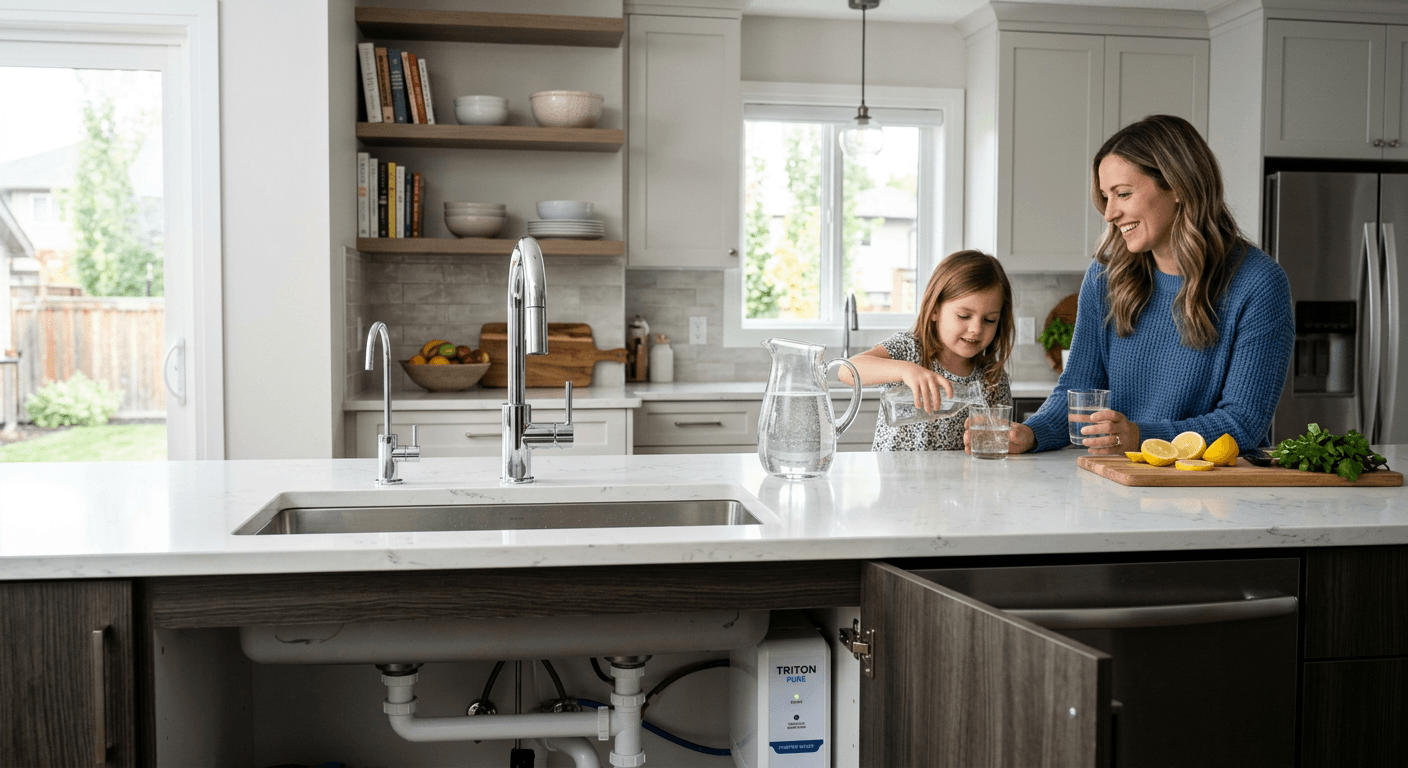
Homeowners dealing with hard water scale and heavy municipal chlorination often assume a basic fridge pitcher will permanently solve their drinking water issues. When the scale continues to build on faucets and the chlorine smell remains strong during the winter months, the next step is usually researching standalone purifiers like the berkey water filter. But municipal water in areas like Edmonton, Beaumont, Leduc, and Sherwood Park carries dissolved solids and specific chemical profiles that require matching the actual filtration mechanism to the local chemistry, rather than just buying the most recognizable brand name. Treating North Saskatchewan River water effectively means understanding the specific local challenges detailed on the Edmonton Water Page | Water Triton, and knowing how water physically moves through a given filter medium. It also requires an honest assessment of what physical space you have available, and whether your household requires continuous on-demand flow or can tolerate slow batch processing.
Quick Summary
Premium water filtration spans portable gravity systems to under-sink reverse osmosis units. Selecting the correct system depends on your required flow rate, available kitchen space, and whether you are targeting specific dissolved solids or simply improving taste.
- Match the system's daily capacity to your household size to prevent frequent cartridge replacements.
- Gravity systems work well during power outages but process water extremely slowly.
- Under-sink units offer continuous flow but require dedicated plumbing space.
- Portable expedition filters suit emergency kits better than daily home consumption.
Table of Contents
- Quick Summary
- Comparison Table
- Buying Guide: Choosing Your Installation Footprint
- 1. Berkey Water Systems
- 2. Santevia
- 3. AquaTru
- 4. Aquasana
- 5. LifeStraw
- Matching the System to Your Home
- Recommended Reads
Comparison Table
| Product | Installation Footprint | Features | Pros | Cons | Target Audience |
|---|---|---|---|---|---|
| Berkey Water Systems | Gravity-Fed Freestanding | Stainless steel housing, Black Berkey elements | Requires no electricity, Large batch capacity, Durable housing | Takes up counter space, Slow filtration rate, Manual refilling | Renters wanting high capacity |
| Santevia | Gravity-Fed Freestanding | Mineral stones, Alkaline filter | Adds beneficial minerals, Improves taste, Uses natural media | Routine cleaning required, Batch processing, Plastic housing | Health-focused consumers |
| AquaTru | Countertop Powered | 4-stage reverse osmosis, Digital display | True RO filtration, Zero plumbing required, Removable pitcher | Needs electrical outlet, Generates wastewater, Requires manual dumping | Homes needing RO without plumbing |
| Aquasana | Under-Sink Integrated | Claryum filtration, Dedicated faucet | Continuous flow, Hidden equipment, High flow rate | Requires plumbing modification, Permanent installation, Uses cabinet space | Homeowners upgrading kitchens |
| LifeStraw | Portable Expedition | Hollow fiber membrane, BPA-free plastic | Extremely lightweight, Blocks pathogens, Needs no power | Very small capacity, Manual suction needed, Ignores dissolved chemicals | Hikers and emergency preppers |
Buying Guide: Choosing Your Installation Footprint
Before comparing specific replacement cartridges or membrane micron sizes, you must define the physical framework of how water will be treated in your home. We classify these systems by their Installation Footprint, which dictates how you will interact with the unit daily.
Gravity-Fed Freestanding systems sit permanently on a counter and rely on weight to push water through thick filter media. They require no electricity or plumbing connections, making them excellent for apartment renters, but they demand manual refilling and patience.
Countertop Powered units use an electrical outlet to run an internal motorized pump, forcing tap water through dense reverse osmosis membranes without altering your home's pipes. They bridge the gap between portable pitchers and permanent installations.
Under-Sink Integrated setups tie directly into your home's cold water line. They provide continuous, on-demand flow through a dedicated faucet mounted on your sink deck. They keep the hardware completely hidden while delivering immediate water volume.
Portable Expedition filters, such as a katadyn water filter, are engineered for survival and outdoor use. They prioritize extreme biological pathogen removal from natural water sources over high daily volume or aesthetic integration in a modern kitchen.
1. Berkey Water Systems
Walking into a modern kitchen, the polished stainless steel cylinder sitting beside the sink is instantly recognizable as a heavy-duty purifier. The Berkey Water Systems unit operates as a Gravity-Fed Freestanding system designed for renters who want substantial batch capacity without modifying their plumbing.
You manually pour tap water into the upper stainless steel chamber, where gravity pulls it down through dense, proprietary carbon block filters. These thick black elements rely on a maze-like structure to trap physical particulates, while the activated carbon composition adsorbs chemical contaminants, volatile organic compounds, and heavy metals. As the liquid slowly navigates the microscopic pores of the media, it leaves behind sediment and the distinct chemical tastes of municipal treatment, eventually collecting in the lower holding tank. The flow rate depends entirely on the weight of the raw water sitting above the elements.
The reputation relies on black carbon elements
The physical realities of this design dictate its daily constraints. Because the internal head pressure drops significantly as the top chamber empties, the final few gallons take exponentially longer to process than the first batch. We would hold off on this if your household consumes high daily volumes and nobody has the discipline to refill the upper tank every single evening before bed. It stops being a useful appliance and becomes a frustrating chore when the daily routine of lifting heavy pitchers of tap water to chest height becomes a point of friction. Furthermore, the sheer vertical height of the steel unit often prevents it from sitting cleanly beneath standard upper kitchen cabinets.
Purchase this model when you require robust, off-grid capable purification and possess an open kitchen island that can accommodate a large, immobile steel housing without obstructing your daily workflow. It demands true patience.
Pros
- Operates smoothly during power outages
- Provides substantial water holding capacity
- Elements last for thousands of gallons
Cons
- Demands significant counter space
- Requires daily manual refilling
- Filtration rate slows as water level drops
2. Santevia
While traditional carbon blocks focus strictly on stripping contaminants out of the municipal supply, a santevia water filter system actively reintroduces natural material into your daily drinking water. Operating in the Gravity-Fed Freestanding category, it is thoughtfully engineered for environmentally conscious residents who specifically target mineralized, alkaline hydration rather than purely stripped water.
The purification path begins with an easily accessible ceramic pre-filter that catches large rust particles, dirt, and pipe scale before the water descends through stages of granular activated carbon and ion-exchange resin. Instead of stopping there, the clean liquid rests in a lower storage basin filled with specially sourced mineral stones. These porous stones gradually leach trace amounts of calcium and magnesium back into the reservoir, chemically raising the pH level and altering the final mouthfeel of the water. It fundamentally changes the chemistry of the liquid to mimic natural spring conditions.
Remineralization fundamentally changes the pH balance
Practical rule: Always measure the physical height between your countertop and upper cabinets before purchasing a gravity system; many are too tall to slide underneath standard cabinetry and must sit on an open island.
What trips up most buyers is the exceptionally slow processing speed coupled with the ongoing physical maintenance demands. The highly effective ceramic dome clogs rapidly if your municipal supply suffers from high winter sediment or infrastructure repairs, forcing you to remove it and scrub the surface clean with an abrasive pad routinely. We would hesitate to deploy this in a busy, large family kitchen because the remineralization process simply cannot keep up with rapid, consecutive demand during the morning rush. The water must physically sit with the stones for an extended period to achieve the desired alkaline shift.
Choose this mineralizing approach if your primary goal is altering the pH of your drinking water and your daily consumption volume remains relatively low. The pace is slow.
Pros
- Raises water pH levels effectively
- Introduces beneficial natural minerals
- Uses natural physical filtration media
Cons
- Extremely slow batch processing time
- Requires frequent ceramic scrubbing
- Cannot handle rapid consecutive use
3. AquaTru
How do you achieve true membrane separation in an apartment that explicitly forbids drilling into the sink deck or altering the cold water pipes underneath? The aquatru water filter resolves that exact structural bottleneck as a Countertop Powered system, serving individuals who need industrial-grade purification on a temporary, portable surface.
A motorized internal pump pulls untreated tap water from a rear raw-water reservoir and forces it under high pressure through a miniaturized four-stage process. After passing through a mechanical pre-filter and an activated carbon block to remove large sediment and chlorine, the liquid hits a semi-permeable reverse osmosis membrane. This dense barrier rejects microscopic dissolved solids, sending the pure water into a removable front dispensing pitcher. The rejected contaminants are flushed backward into the raw tank as a concentrated wastewater brine. This mechanism mimics a permanent household installation but packages the entire pressure cycle inside a single plastic appliance.
Countertop reverse osmosis bypasses plumbing modifications completely
A standalone pump adds mechanical noise. It also makes wastewater handling part of the routine. For every gallon of clean water produced, a significant volume of concentrated brine is left behind in the rear tank. You must carry it to the sink and dump it before running the next cycle. It would be worth skipping in areas with exceptionally hard water. The resulting scale can aggressively attack the internal pump and raw water tank, requiring constant descaling with vinegar to keep the machine operational.
Invest in this countertop unit when you demand the thoroughness of reverse osmosis but lack the authority or desire to install permanent under-sink plumbing hardware. It runs quite loud.
Pros
- Delivers true reverse osmosis filtration
- Requires zero under-sink plumbing work
- Dispensing tank removes for fridge storage
Cons
- Takes up limited electrical outlet space
- Generates heavy concentrated wastewater
- Requires manual tank dumping routines
4. Aquasana
Eliminating the endless chore of refilling countertop reservoirs completely changes how a busy kitchen functions day to day. Representing the Under-Sink Integrated footprint, an aquasana water filter setup is built for property owners looking to hide their filtration hardware entirely while gaining immediate, pressurized access to treated water.
Rather than depending on a small internal electric motor, this system uses your home's existing municipal water pressure to create the necessary flow. The setup is straightforward. The main cold water line diverts through a dedicated manifold holding multiple dense filter cartridges, typically a combination of catalytic carbon, activated carbon, and specialized ion-exchange media. Water then moves through absolute sub-micron physical barriers. That helps catch microscopic cysts. It exits through a dedicated secondary faucet mounted directly on your sink deck. Because the system stays constantly pressurized by the city grid, clean water arrives the moment you turn the handle.
Multi-stage filtration demands sustained incoming water pressure
An inline system gives up undersink cabinet space. It also depends on strong municipal flow rates. If your home already has low incoming water pressure, pushing that weak flow through tightly packed carbon blocks can reduce output at the faucet to a frustrating trickle. Another option would make more sense if your sink cabinet is already crowded with a bulky garbage disposal, deep sink basins, and cleaning supplies. In that case, there may be virtually no room to mount the required manifold or handle future filter changes. Homeowners evaluating the long-term reliability of permanent plumbing integrations often review coverage details similar to those on the Warranty Page | Water Triton.
Select this integrated setup if you have ample cabinet space and prioritize instant, continuous flow over appliance portability. The hardware stays hidden.
Pros
- Completely hides equipment beneath counters
- Provides an immediate, on-demand flow rate
- Utilizes existing home water pressure
Cons
- Requires permanently drilling the countertop
- Demands dedicated under-sink cabinet space
- Reduces flow drastically if home pressure is low
5. LifeStraw
According to its published specifications, the lifestraw water filter brand categorizes its filtration technology for portable, gravity-fed, and home applications alike. Despite that broad consumer marketing, this Portable Expedition tool is fundamentally engineered for hikers, emergency prep kits, and backcountry travelers who must safely drink directly from unverified surface water.
The core technology inside the lightweight plastic housing relies entirely on a densely packed bundle of hollow fiber membranes shaped like microscopic macaroni tubes. When water is actively drawn up the straw by the user, it hits porous walls measuring exactly 0.2 microns across. Bacteria, parasites, and microplastics are physically too large to fit through these microscopic gaps. Consequently, the biological threats remain trapped securely on the outside walls of the fibers, while safe, filtered hydration flows smoothly up the center of the tubes and reaches the user.
Hollow fiber membranes excel in austere outdoor environments
Practical rule: Never allow a hollow fiber membrane to freeze after its initial use; ice crystals expanding inside the microscopic tubes will physically shatter the filtration barrier, rendering it useless.
The profound weakness of hollow fiber microfiltration is its complete inability to address dissolved chemistry, heavy metals, or common urban water issues. It does absolutely nothing to reduce hard water scale, agricultural runoff, or the heavy chlorine taste routinely found in municipal supplies. We would never rely on this bare-bones biological technology as a primary drinking source inside a modern residence, as it leaves the most common residential complaints entirely untreated. It also requires substantial lung capacity to draw water through the restrictive membrane.
Pack this lightweight filter strictly for backcountry survival scenarios or emergency preparedness kits where severe biological contamination is the primary threat. It ignores dissolved chemicals.
Pros
- Features an extremely lightweight profile
- Blocks hazardous biological contaminants securely
- Needs absolutely no electrical power
Cons
- Requires significant physical suction effort
- Produces an extremely low output volume
- Fails completely to reduce water hardness
Matching the System to Your Home
Selecting the right approach comes down to acknowledging how you interact with your kitchen and what your plumbing allows.
When your priority is removing dissolved solids and you own your property, the Under-Sink Integrated setups offer the most practical daily experience. They connect seamlessly beneath the counter, handling high-volume cooking and drinking demands without creating visual clutter. For homes combining this point-of-use filtration with whole-home softening, a Triton Pure or Triton Pure Tankless package follows this same integrated, permanent philosophy.
If you are renting or unwilling to drill into your countertops, look toward Countertop Powered systems. They provide the dense membrane filtration of a permanent installation while remaining entirely portable when your lease ends.
For those who want zero reliance on the electrical grid and prefer to process water in large batches, a Gravity-Fed Freestanding unit will serve well. You must simply be prepared to dedicate a permanent square of prep space to the housing and accept the slower processing speed.
Finally, reserve Portable Expedition tools purely for the outdoors or emergency preparedness kits. Their mechanisms are brilliant for pulling safe hydration from a backcountry stream, but they are frustratingly inadequate for the daily rhythm and specific chemical challenges of a modern residential kitchen.