Evaluating Waterdrop Reverse Osmosis and Competing Filter Systems
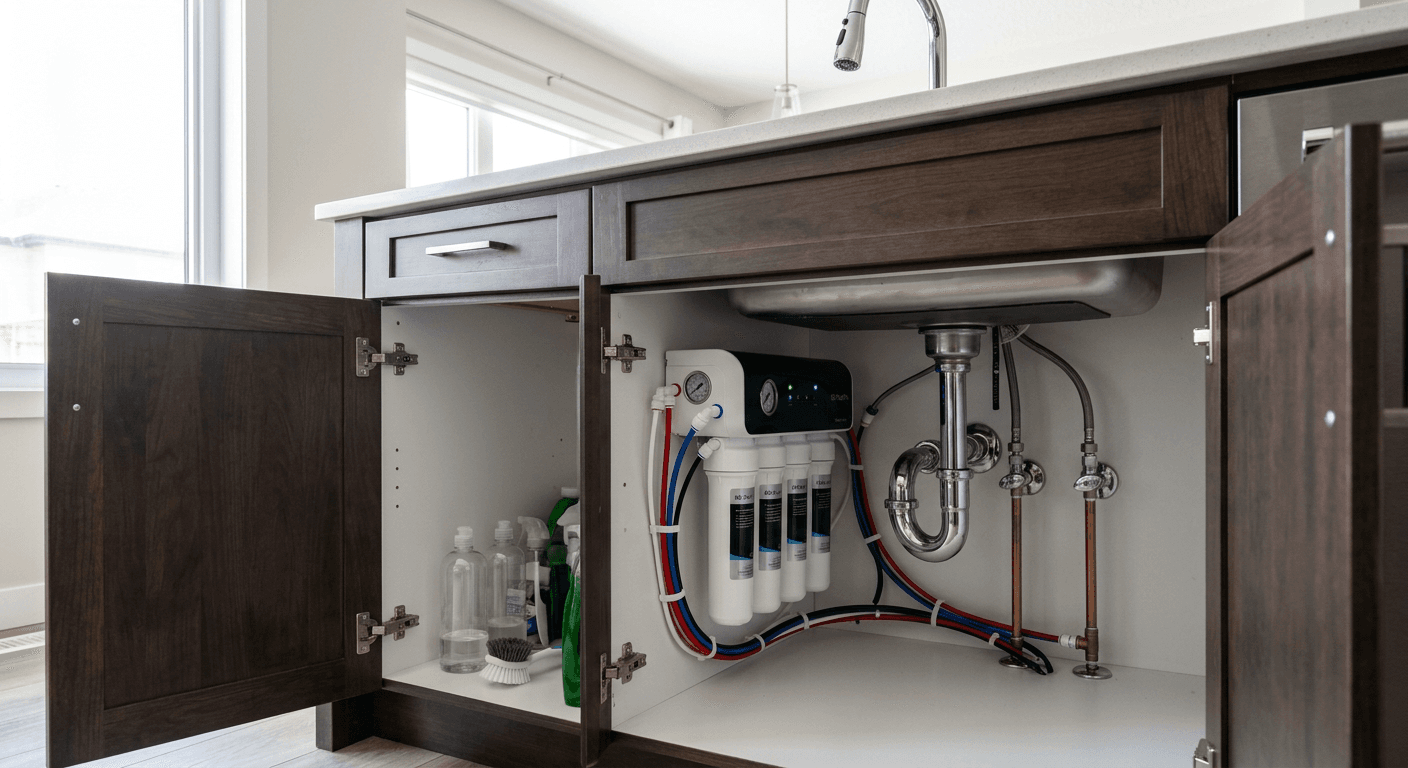
Many homeowners in regions with notoriously hard municipal water eventually reach a breaking point with their tap water. You fill a glass, hold it to the light, and watch a cloudy suspension of dissolved minerals slowly settle at the bottom. By the time that same scale starts choking your kettle and drying out your skin, you realize standard fridge filters are outmatched. This is exactly the scenario where a dedicated setup steps in to strip out the dissolved solids that basic carbon blocks leave behind. When evaluating your options, including finding a reliable waterdrop reverse osmosis unit, the focus must shift from what these systems remove to how they integrate into your plumbing. Navigating the mechanics of pure-to-drain ratios and storage capacities reveals the true operational cost of clean drinking water.
Quick Summary
A residential reverse osmosis system forces municipal tap water through a semi-permeable membrane at high pressure, effectively separating pure water molecules from dissolved solids, heavy metals, and chlorine. Choosing the correct unit dictates not just your drinking water quality, but how much cabinet space you sacrifice and how much wastewater your home produces.
- RO systems demand precise pure-to-drain ratios, directly impacting your monthly water utility usage.
- Under-sink space constraints force a choice between motorized footprints and storage-based consistency.
- Local water chemistry dictates whether you need alkaline remineralization stages after the primary filtration process.
- Proprietary filter ecosystems simplify maintenance but lock you into specific manufacturer pricing long-term.
Table of Contents
- What to Look for in a Waterdrop Reverse Osmosis Setup and Alternatives
- 1. Waterdrop G3P600 Under-Sink Reverse Osmosis System
- 2. iSpring RCC7AK 6-Stage Reverse Osmosis Water Filtration System
- 3. Waterdrop K19 Countertop RO System
- 4. Culligan Aquasential Tankless RO Drinking Water Filter System
- Matching Your Household to the Right Architecture
- Recommended Reads
| Product | Installation Architecture | Features | Pros | Cons | Target Audience |
|---|---|---|---|---|---|
| Waterdrop G3P600 | Tankless Under-Sink | 600 GPD, 2:1 pure-to-drain ratio, smart faucet | Compact, low wastewater, fast flow | Requires electricity, proprietary filters, high filter cost | Space-constrained modern kitchens |
| iSpring RCC7AK | Tank-Based Under-Sink | 6-stage filtration, remineralization, standard housings | Universal filters, operates without power, alkaline stage | Large footprint, slower refill, complex installation | Budget-conscious DIY homeowners |
| Waterdrop K19 | Freestanding/Countertop | 170 oz manual tank, 1-year warranty, zero plumbing | No installation, highly portable, visual water level | Manual refilling required, countertop space heavy, small capacity | Renters and office spaces |
| Culligan Aquasential | Tankless Under-Sink | Dealer installation, maintenance plans, high flow | Turnkey service, professional support, zero maintenance effort | Very high upfront cost, tied to dealer network, contract dependent | Hands-off homeowners wanting full service |
What to Look for in a Waterdrop Reverse Osmosis Setup and Alternatives
Evaluating purification hardware requires understanding the structural differences in how these systems manipulate water pressure. The core criteria that separate modern reverse osmosis systems is their Installation Architecture. The industry categorizes these approaches into three distinct paths: Tankless Under-Sink, Tank-Based Under-Sink, and Freestanding/Countertop.
Tankless Under-Sink systems utilize active motorized booster pumps to drive tap water through the semi-permeable membrane on demand. This architecture eliminates the need for a storage barrel, freeing up significant cabinet space. By pushing water forcefully, they generate high flow rates, but they inherently require a dedicated electrical outlet and produce mechanical noise during operation.
Tank-Based Under-Sink configurations rely entirely on municipal line pressure to force water through the filters slowly. The purified output collects in a pneumatic storage tank beneath the counter. While this requires zero electricity and operates silently, the bulky pressure barrel consumes most of the usable space beneath a standard kitchen sink and inevitably loses output pressure as the internal reservoir depletes. These systems are highly sensitive to initial input pressure, especially when dealing with Edmonton's municipal water conditions, which introduces heavy mineral hardness that can prematurely foul membranes.
Freestanding/Countertop units bypass household plumbing entirely. These appliances house the internal pump, filtration membrane, and dual water reservoirs inside a single chassis that sits on the counter. They remain completely portable and require no permanent modifications to the home, making them ideal for temporary living situations. However, their capacity is strictly limited by the size of the manual fill tank, turning hydration into an active daily chore.
Practical rule: Always match a system's pure-to-drain ratio against your local utility costs; a cheaper system that wastes four gallons for every pure gallon can erase its savings through inflated water bills within a year.
Regardless of the architecture, verifying your starting hardness by evaluating your water quality in person dictates whether a standalone RO system will survive, or if a whole-home softener is required upstream to protect the delicate filtration membranes from premature scaling.
1. Waterdrop G3P600 Under-Sink Reverse Osmosis System
Where will the filtration hardware go? This question arises immediately when a kitchen contractor opens a sink cabinet to find a garbage disposal dominating the center. This Waterdrop reverse osmosis water filter uses an internal booster pump. It avoids relying strictly on incoming municipal line pressure. By actively driving water through the semi-permeable membrane, it achieves a capacity of 600 gallons per day. It maintains a 2:1 pure-to-drain ratio. Operating cleanly within the Tankless Under-Sink category, it discards the bulky pneumatic storage barrel entirely. This reduces the installation footprint to a single narrow chassis. On the Canadian store, this specific unit is priced at $579.00 CAD (discounted from $699.00 CAD). The mechanism requires a dedicated electrical outlet beneath the sink. This powers the internal pump only when the smart faucet is engaged. I would hold off if running a new electrical outlet under the sink in older homes adds significant contractor fees to the project.
High flow rates mask proprietary filter dependencies
Relying on a closed ecosystem severely restricts long-term maintenance options. Because the integrated manifolds only accept the manufacturer's specific twist-and-pull cartridges, a homeowner loses the ability to source third-party replacements if pricing changes or stock becomes unavailable.
This compact footprint best serves modern, space-constrained kitchens where an electrical outlet is already available beneath the counter.
Pros
- Eliminates the bulky storage tank
- Operates with an efficient 2:1 pure-to-drain ratio
- Integrated smart faucet indicates filter status
Cons
- Mandates a dedicated electrical outlet
- Locks owners into proprietary replacement cartridges
- Demands higher initial purchase pricing
2. iSpring RCC7AK 6-Stage Reverse Osmosis Water Filtration System
Internal pumps save cabinet space. Traditional pneumatic pressure vessels prioritize mechanical simplicity instead. The iSpring Water Systems RCC7AK functions as a classic ispring 6-stage reverse osmosis system. It pushes municipal water through standard 10-inch housing blocks. This process relies solely on the home's existing line pressure. Because it uses no electricity, the purification happens slowly over several hours. It stores the clean water in a pressurized barrel until the faucet is opened. This specific model measures 39.37 cm × 40.64 cm × 45.72 cm. It weighs 9.07 kg (20 lb.). This makes it a substantial addition to any cabinet space. Operating within the Tank-Based Under-Sink category, it includes an alkaline remineralization stage. This actively adds calcium and magnesium back into the output. It corrects the slightly acidic pH naturally resulting from stripping water of all its dissolved solids. Any standard ispring water filter replacement can be swapped for generic equivalents. This insulates the buyer from brand-specific markups. I would hold off if the plumbing environment lacks the vertical clearance to maneuver heavy filter wrenches comfortably.
Standardized sizing trades convenience for long-term economy
The tradeoff for universal filter compatibility is a demanding physical installation and a cumbersome maintenance routine. Replacing standard drop-in filters requires a housing wrench, significant physical torque, and a willingness to manage water spills inside the cabinet during annual swaps.
This traditional setup suits budget-conscious DIY homeowners who prioritize long-term filter economy over cabinet storage space.
Pros
- Functions entirely without electricity
- Utilizes standard universal filter sizes
- Reintroduces healthy minerals via an alkaline stage
Cons
- Consumes significant under-sink cabinet volume
- Requires physical torque to change housings
- Dispenses water slowly as tank pressure drops
3. Waterdrop K19 Countertop RO System
The most rigid barrier to accessing purified drinking water is the inability to alter the building's plumbing infrastructure. Operating strictly in the Freestanding/Countertop category, the Waterdrop K19 functions entirely independently of municipal supply lines. Instead of tapping into a cold water pipe beneath the sink, the user manually fills a 170 oz capacity water tank located at the rear of the unit. An internal pump then cycles that volume through the waterdrop reverse osmosis filter, routing the purified output to the front dispenser and leaving the concentrated rejected water behind in the raw tank. Measuring 35 cm × 19.99 cm × 41.5 cm, it occupies a footprint similar to a large espresso machine and comes with a 1-year warranty. Because it bypasses the drain line completely, the system relies on the user physically discarding the wastewater after each purification cycle. We would rule this out for large households, as constantly cycling a manual reservoir quickly becomes an aggravating daily chore.
Portability bypasses plumbing at the cost of manual refilling
Relying on a manual reservoir creates a hard ceiling on daily utility. The 170 oz tank must be lifted, filled, and purged repeatedly for heavy cooking, turning an automated utility into a highly repetitive manual task.
This portable appliance is the only viable option for renters or temporary occupants strictly prohibited from modifying plumbing fixtures.
Pros
- Requires zero plumbing modifications
- Allows for complete portability between residences
- Occupies a minimal footprint for its capacity
Cons
- Forces manual refilling and wastewater dumping
- Limits daily output strictly by the small tank size
- Sacrifices valuable countertop real estate
4. Culligan Aquasential Tankless RO Drinking Water Filter System
High-pressure internal pumps define this design. The Culligan Water Aquasential Tankless RO Drinking Water Filter System operates firmly within the Tankless Under-Sink category. It delivers immediate flow to the faucet. A storage reservoir is not required. Rather than selling a static piece of hardware for the homeowner to maintain, this culligan water filter system functions as a managed utility. Specific Canadian dealerships handle the initial installation, the integration with existing plumbing, and the scheduled membrane replacements. Households hesitant to commit to a high initial purchase price can rent a single piece of Culligan equipment for the first three months, or choose their Better Drinking Water Package. Avoiding DIY filter replacements completely justifies paying a steep premium for professional service.
Dealership models shift maintenance risk to the provider
Outsourcing the upkeep entirely binds the homeowner to the dealership's ongoing service schedule and proprietary hardware ecosystem. If a local branch closes or service fees increase, the property owner cannot legally or practically service the internal components themselves, rendering the hardware dependent on a third party.
Practical rule: Dealership quotes should separate the hardware cost from the recurring service contract; verifying the penalty for canceling the service agreement prevents unexpected long-term liabilities.
This fully managed service appeals directly to homeowners who want guaranteed drinking water quality without ever touching a piece of maintenance hardware.
Pros
- Transfers all maintenance duties to a professional dealership
- Delivers high flow rates without a traditional storage tank
- Integrates seamlessly with whole-home treatment plans
Cons
- Imposes a massive upfront purchase price
- Binds the household to recurring service contracts
- Removes the ability to source third-party replacement parts
Matching Your Household to the Right Architecture
Choosing the correct purification system depends entirely on identifying the primary constraint in your kitchen space and daily routine.
If physical space is your absolute bottleneck, Tankless Under-Sink models eliminate the storage barrel entirely. These systems are highly effective for modern kitchens where dual-basin sinks and garbage disposals dominate the under-counter layout. However, they mandate an electrical hookup. Rather than risking a DIY plumbing failure, understanding local in-house installation standards guarantees a leak-free integration with your existing pipes and electrical lines.
If reliability and low maintenance costs are the priority, Tank-Based Under-Sink setups remain the standard. They run independently of electrical grids and allow homeowners to source generic replacement filters cheaply over the lifespan of the equipment. Unlike units protected by lifetime tank warranty coverage, standard storage barrels do eventually lose pneumatic pressure and require manual repressurization or replacement.
If you have absolutely no permission to alter the plumbing, Freestanding/Countertop units are the sole solution. They provide immediate access to reverse osmosis filtration without needing a wrench, though they demand constant physical interaction to fill and dump the water reservoirs.
Homeowners located in Edmonton, Beaumont, Leduc, and Sherwood Park often face aggressive scaling from municipal sources. When addressing both whole-home hardness and point-of-use purification, combining treatments is highly effective. Packages like the Triton Pure seamlessly pair heavy-duty softening with Tank-Based Under-Sink filtration, while the Triton Pure Tankless offers a modernized, space-saving equivalent for high-demand kitchens dealing with local hard water issues.