The 4 Best Water Filter For Home Systems in Canada (2026)
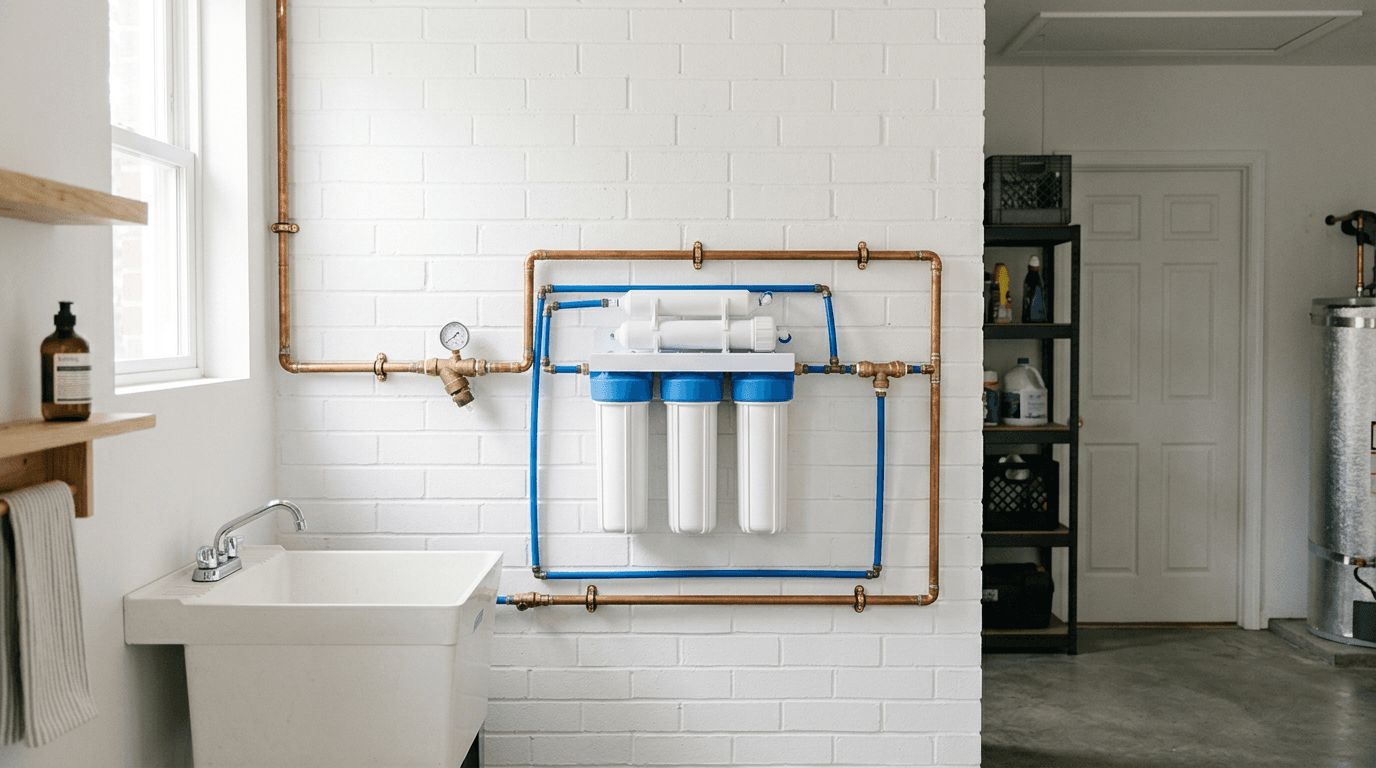
The assumption that municipal treatment facilities deliver water optimized for residential plumbing is a costly error. While city plants effectively neutralize biological threats, the residual chemical disinfectants and dissolved minerals that reach the tap routinely degrade appliances, dry out skin, and affect the taste of drinking water. Identifying the best water filter for home environments requires separating marketing promises from mechanical reality. Different contaminants require entirely different filtration media, and deploying the wrong technology against a specific local water profile yields negligible improvements.
Quick Summary
A residential water filtration system is a mechanical or chemical barrier designed to extract dissolved solids, particulate matter, or chemical disinfectants from a household water supply.
- The right choice depends entirely on the specific contaminants present in the local water supply.
- Point-of-use systems treat drinking water at a single tap, while whole-house configurations protect the entire plumbing stack.
- Reverse osmosis remains the standard for removing total dissolved solids, but requires a drain line for wastewater.
- Chloramine treatment demands catalytic carbon, as standard activated carbon cannot break the ammonia-chlorine bond efficiently.
Table of Contents
- Evaluating the Best Water Filter for Home Systems
- System Comparison Table
- 1. Santevia MINA Alkaline Water Pitcher
- 2. Rainfresh UCS2 Under-Sink Water Filter System
- 3. Waterdrop K19 Countertop RO Water Filter System
- 4. Aquatell Upflow Catalytic Carbon Whole Home Filter
- Where Installation Type Dictates the Final Choice
- Recommended Reads
Evaluating the Best Water Filter for Home Systems
Before analyzing individual specifications, buyers must determine the structural classification that fits their dwelling. We categorize the best water filter systems for home applications along a single, non-negotiable axis: Installation Type.
The four categories along this axis are Pitcher System, Under-Sink Filtration, Countertop Reverse Osmosis, and Whole-Home System. A Pitcher System relies on gravity to pull water through a localized cartridge, serving exclusively as a small-batch drinking water solution. Under-Sink Filtration ties directly into the cold water supply line of a specific fixture, delivering treated water on demand without consuming counter space. Countertop Reverse Osmosis operates as a standalone, plug-and-play appliance that pushes water through a semi-permeable membrane, ideal for environments where plumbing modifications are strictly prohibited. Finally, a Whole-Home System intercepts water at the point of entry, protecting water heaters, dishwashers, and showerheads across the entire property.
Selecting the best drinking water filter system for home environments also demands an understanding of regional supply characteristics. For instance, Edmonton's unique water conditions involve drawing from the North Saskatchewan River, yielding hard water alongside chlorine disinfectants. Neighboring areas experience similar profiles; analyzing Beaumont municipal treatment or Leduc's supply reveals that addressing both mineral scale and chemical taste often requires a combined approach. For comprehensive management, pairing a specific filter type with softening hardware - such as the Triton Pure or Triton Pure Tankless packages - prevents the filtration media from being prematurely blinded by calcium deposits. Understanding this baseline ensures you deploy the right Installation Type rather than simply buying the most expensive hardware available.
System Comparison Table
| Product | Installation Type | Features | Pros | Cons | Target Audience |
|---|---|---|---|---|---|
| Santevia MINA | Pitcher System | NSF 42/53/401 testing, mineral addition | No plumbing required, independently tested, low upfront cost | 2-month filter life, slow filtration, small capacity | Renters seeking basic chlorine reduction |
| Rainfresh UCS2 | Under-Sink Filtration | 3-stage filtration, 0.3-micron rating, bayonet closure | Wrench-free changes, dedicated faucet, unseen footprint | Requires drilling counter, physical barrier only, 6-month pre-filter lifespan | Homeowners targeting sediment and cysts |
| Waterdrop K19 | Countertop Reverse Osmosis | 170 oz tank, 3:1 drain ratio, deep filtration | Plug-and-play setup, 1-year filter lifespan, high capacity tank | USD pricing model, manual refilling required, generates wastewater | Apartment dwellers wanting RO purity |
| Aquatell Upflow | Whole-Home System | Catalytic carbon media, upflow design | No backwash needed, zero drain line, treats chloramine | High starting cost, professional install advised, no softening capability | Families needing property-wide chemical extraction |
1. Santevia MINA Alkaline Water Pitcher
The mistake homeowners routinely make when evaluating pitcher filters is assuming they all rely on the same generic granular carbon. The Santevia MINA is a Pitcher System designed for users who want to extract chemical tastes while simultaneously introducing beneficial minerals back into their daily drinking supply.
Gravity pulls tap water slowly downward. It moves through a sequence of filtration layers. It then rests in a holding reservoir. The standard cartridge is independently lab-tested to NSF Standards 42, 53, and 401. This demonstrates an average chlorine reduction of over 99.9%. The water is not entirely stripped of dissolved solids. A final stage pushes it over mineral stones to elevate alkalinity. According to the manufacturer, the compatible MINA Fluoride Filter is rated to remove 99% of fluoride. The Standard Filter is not rated for fluoride filtration.
The limitation of gravity feed
The structural limit of this setup lies in its maintenance frequency and reliance on gravity. The filter cartridge requires replacement every two months, forcing a recurring operational cost that eventually eclipses the $59.99 CAD initial purchase price. Furthermore, the slow percolation rate means large families will constantly drain the pitcher faster than it can process a new batch. We would hesitate to deploy this in a household that consumes several liters of water a day, as the continuous refilling quickly becomes an operational bottleneck.
A reader should purchase this option if they are renting a property where plumbing modifications are strictly forbidden and their primary objective is neutralizing chlorine taste on a budget.
Pros
- Does not require a plumber or modified pipework
- Restores mineral content to the filtered water
- Verified against strict NSF reduction standards
Cons
- Continual cartridge replacements every sixty days
- Fluoride extraction requires buying a specific, separate filter
- Processing time cannot match on-demand flow rates
2. Rainfresh UCS2 Under-Sink Water Filter System
Removing the bottleneck of countertop clutter often pushes buyers toward integrated solutions. The Rainfresh UCS2 is an Under-Sink Filtration unit engineered for environments drawing from municipally treated lines, untreated wells, or lake water sources.

This system forces water pressure through a three-stage mechanical barricade. The primary mechanism relies on a sub-micron physical barrier rather than just chemical adsorption. It reduces sediment and particulate matter of 0.3 microns or larger by more than 99.99%. To maintain this flow without the housing locking up under pressure, the unit features a 1/8th turn bayonet closure that enables cartridge changes without the use of a wrench.
Sub-micron barriers prioritize physical matter
What this mechanical approach does poorly is alter the dissolved mineral composition of the water. Because the ceramic core specifically targets cysts, dirt, and microscopic particulates, it will not drop the water's hardness level or extract dissolved heavy metals requiring ionic exchange. The maintenance schedule is also staggered, demanding careful tracking: the 1M ceramic replacement cartridge lasts up to one year, but the CF2 pre-filter lasts only up to six months. If the pre-filter is ignored, the dense ceramic stage blinds prematurely.
A buyer should secure this model if their main concern is suspended physical sediment or cyst contamination and they possess the under-counter clearance to mount a permanent fixture.
Pros
- Bayonet design eliminates stuck filter housings
- Operates effectively on untreated lake and well sources
- Drastically reduces particulate matter at 0.3 microns
Cons
- Retails at a special price of $161.49 CAD down from $189.99 CAD, lacking permanent pricing stability
- Tracking two separate replacement schedules complicates maintenance
- Installation demands drilling a hole for the dedicated faucet
3. Waterdrop K19 Countertop RO Water Filter System
The trigger event that sends users looking for portable reverse osmosis is typically a rental agreement that bans drilling through a granite countertop. The Waterdrop K19 is a Countertop Reverse Osmosis appliance built for users demanding deep filtration without touching their property's pipework.
An integrated deep filtration process forces water across a semi-permeable membrane. This strips out total dissolved solids at a molecular level. RO mechanics inherently generate wastewater. To manage this without a dedicated under-sink drain connection, an integrated water recycling system uses a 3:1 drain ratio. Users fill the 170 oz high-capacity water tank manually. The system pumps this water through the membrane. Rejected concentrate returns to the reservoir. It is discarded later.
Practical rule: Never assume reverse osmosis systems operate with zero waste; always check the drain ratio to understand how much raw water is required to produce one liter of purified output.
Deep filtration generates unavoidable wastewater
Manual labour drives this non-plumbed system. The user effectively becomes the water line. You must repeatedly carry the 170 oz tank to the sink. You dump the rejected wastewater. Then, you refill it with fresh supply. Furthermore, the unit is priced at $309.00 USD on the developer's product list. This exposes Canadian buyers to exchange rate volatility at checkout. Hold off if you intend to use purified water for boiling pasta or filling large pots. The manual reservoir cycle will severely disrupt kitchen prep times.
A consumer should invest in this appliance if they require the absolute purity of reverse osmosis but are structurally prevented from tying into a cold water line.
Pros
- The composite replacement filter (K19RF) only needs replacement once a year or every 1,000 gallons
- Includes a 1-year product warranty
- Operates entirely independent of household plumbing infrastructure
Cons
- Demands manual dumping of concentrated wastewater
- USD pricing creates unpredictable final costs for Canadian residents
- Takes up considerable physical space on a kitchen counter
4. Aquatell Upflow Catalytic Carbon Whole Home Filter
For residents navigating heavily chlorinated municipal supplies, treating only the kitchen tap leaves showers and appliances exposed to chemical degradation. The Aquatell Upflow is a Whole-Home System engineered to extract chemical disinfectants from municipal or well water the moment it enters the building.
This unit abandons the traditional downward flow design found in most tanks. It is designed to flow water in the upflow direction, eliminating the need for a control valve mechanism and a drain line. As the water lifts the media bed, it creates prolonged contact time with the internal catalytic carbon. This specific carbon grade is engineered with an altered surface structure, which is required for effectively treating water that contains chloramine. Standard granular activated carbon simply cannot break the ammonia-chlorine bond quickly enough at typical household flow rates.
Upflow kinetics eliminate mechanical failure points
The boundary of this technology is its strict focus on chemical extraction over hardness reduction. Priced starting from $599.99, it represents a significant capital outlay that does absolutely nothing to prevent calcium scale buildup. If you live in an area notorious for mineral deposits, running this tank in isolation will not protect your water heater or dishwasher. We would hold off on this installation if hard water scale is your primary plumbing failure mode, as you will still need a secondary softening unit placed directly after this tank.
A property owner should select this tank if their municipal provider utilizes chloramine disinfection and they wish to remove chemical odors from every shower and tap without adding a wastewater drain line.
Pros
- Operates without drawing electricity for a control valve
- Bypasses the need for complex wastewater plumbing
- Catalytic media effectively targets stubborn chloramine bonds
Cons
- Requires cutting into the main domestic water line
- Starting price scales up rapidly depending on the required tank size
- Offers zero defense against calcium and magnesium scale
Where Installation Type Dictates the Final Choice
Finding the best water filter canada has to offer means mapping your specific living situation directly to the right category. The market is saturated with options, but identifying the correct structural approach immediately eliminates incompatible hardware.
If your bottleneck is a strict rental lease or a complete lack of plumbing experience, the Pitcher System provides immediate, accessible relief from chlorine tastes. It serves as a short-term, low-yield solution for individuals who just need clean water for a single coffee machine or daily drinking glass. It fails when scaled up to multi-person households, where the constant refilling becomes an unavoidable chore.
When counter space is non-existent but point-of-use purity is required, Under-Sink Filtration steps in. This category suits homeowners willing to drill a secondary hole in their sink deck. It delivers on-demand flow rates that pitchers cannot match, making it the superior choice for washing vegetables and filling large cooking pots.
For residents who demand the aggressive extraction capabilities of a semi-permeable membrane but cannot commit to under-counter plumbing, Countertop Reverse Osmosis bridges the gap. It is the definitive choice for apartment dwellers dealing with highly dissolved solids, provided they accept the manual labor of emptying the system's wastewater reservoir.
Finally, when chemical disinfectants are ruining showers, degrading rubber plumbing seals, and causing widespread skin irritation, a Whole-Home System is the only viable intervention. By treating the water before it splits to the various rooms, it protects the entire property. In hard water markets, users routinely combine this category with softening hardware to create comprehensive multi-stage setups, treating both the chemical and mineral threats simultaneously.