The 5 Best Water Softener Systems for Canadian Homes (2026)
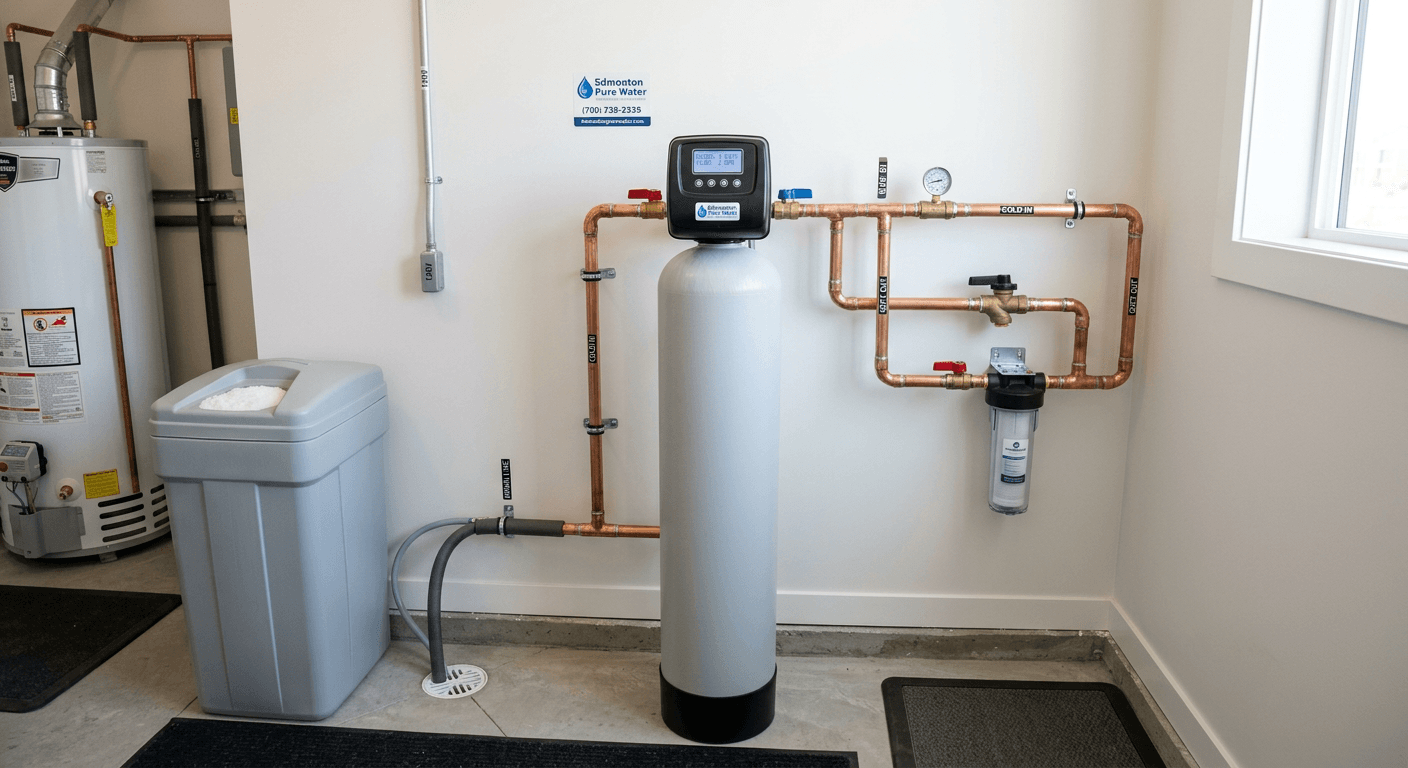
The most expensive mistake homeowners make when evaluating the best water softener for their plumbing is confusing a water conditioner with a true mineral extractor. When you step into a shower and notice the soap refusing to lather, the mechanical failure of hard water has already begun. The dissolved rock carried in municipal supplies binds to heating elements and pipe walls, quietly choking the infrastructure of the house. Addressing that requires either physically exchanging those mineral ions for sodium, or temporarily altering their molecular structure so they cannot stick to your plumbing. A true system extracts the calcium; a conditioner merely suspends it. Finding the best water softener systems requires matching the internal mechanism of the tank to the exact failure you are trying to prevent, rather than trusting the marketing printed on the box.
Quick Summary
A residential water softening system operates by chemically extracting or physically altering dissolved calcium and magnesium to prevent scale buildup inside plumbing infrastructure. The most effective systems match the treatment mechanism to the specific water chemistry and wastewater regulations of the property.
- Salt-based ion exchange permanently removes hardness minerals from the water supply.
- Electronic conditioners prevent internal pipe scaling without altering the chemical makeup of the water.
- Media-based conditioners crystallize minerals to stop adhesion but require cyclical media replacements.
- Homes with heavy chlorination and hard water benefit most from combined dual-stage filtration.
Table of Contents
- The Best Water Softener Replaces Marketing With Mechanics
- How to Choose the Right Treatment Category
- 1. HydroFLOW Canada Salt-Free Water Conditioner
- 2. Aquatell Clack WS1 Water Softener
- 3. Kinetico Premier XP Water Softener
- 4. Culligan Aquasential Salt-Free Conditioner
- 5. EcoPure EPAWCS Salt-Free Whole Home Water Conditioner
- Matching the Mechanism to the Household
- Recommended Reads
The Best Water Softener Replaces Marketing With Mechanics
| Product | Treatment Mechanism | Features | Pros | Cons | Target Audience |
|---|---|---|---|---|---|
| HydroFLOW Pearl | Electronic Salt-Free Conditioning | External pipe mount, 150 kHz signal | No plumbing cuts required, Zero physical footprint, No ongoing salt costs | Leaves calcium in water, Does not stop glass spotting, Requires unshielded pipe length | Homes with zero mechanical room floor space |
| Aquatell Clack WS1 | Salt-Based Ion Exchange | 10% cross-linked resin, 200+ lb salt capacity | Permanent hardness removal, Protects against chlorine, High flow rate support | Large mechanical footprint, Requires 110V outlet, Generates wastewater | Large households needing measurable softening |
| Kinetico Premier XP | Salt-Based Ion Exchange | Dual-tank design, Non-electric turbine | Continuous soft water, No electrical dependence, WQA certified | High initial capital cost, Cannot schedule flushing, Susceptible to flow drops | Properties lacking mechanical room electrical access |
| Culligan Aquasential | Media-Based Salt-Free Conditioning | Zero wastewater, Crystallization media | Prevents internal scale, Eliminates salt hauling, Environmentally compliant | Media degrades over time, Requires periodic repacking, Does not remove minerals | Regions with strict municipal chloride discharge bans |
| EcoPure EPAWCS | Media-Based Salt-Free Conditioning | Integrated 5-micron carbon, Scale prevention | Reduces municipal chlorine, Protects downstream fixtures, Single tank footprint | Vulnerable to heavy sediment, Requires separate pre-filter, Does not lather soap | Urban residents prioritizing chemical taste reduction |
How to Choose the Right Treatment Category
Evaluating residential water softening equipment begins by ignoring brand names and focusing entirely on the chemical process occurring inside the primary vessel. We classify these systems across three strict mechanical categories: Salt-Based Ion Exchange, Electronic Salt-Free Conditioning, and Media-Based Salt-Free Conditioning. Each category solves a distinct failure mode, and deploying the wrong mechanism guarantees the system will fail to meet your expectations.
Salt-Based Ion Exchange is the traditional approach. It routes incoming municipal water through a pressurized vessel filled with negatively charged resin beads. These beads physically trap the heavy calcium and magnesium ions, replacing them with benign sodium. This is the only category that actually removes the dissolved rock from your home's water supply.
Electronic Salt-Free Conditioning abandons the plumbing cuts entirely. These devices clamp onto the exterior of the main water line and broadcast an electrical signal into the water column. The signal forces the mineral ions to cluster into microscopic crystals that flow through the pipes without adhering to the walls, preventing internal scale without generating any wastewater.
Media-Based Salt-Free Conditioning routes water through a physical tank filled with specialized nucleation media. Like electronic conditioning, it does not extract the calcium. Instead, it forces the minerals to crystallize as they pass over the media bed.
Practical rule: Never size an ion exchange unit based solely on household square footage or bathroom count; calculate the necessary system capacity by multiplying your exact grains of hardness by your daily water consumption.
For regions with complex municipal chemistry - such as the hard water profiles across Edmonton, Beaumont, Leduc, and Sherwood Park - treating the main line is often only the first step. Municipal treatment facilities rely on heavy chlorination, meaning local residents frequently require dual-stage interventions. In these specific chemical conditions, addressing both fronts simultaneously is highly effective. Combining a whole-home softening vessel at the point of entry with a specialized reverse osmosis system at the kitchen sink - such as the Triton Pure and Triton Pure Tankless packages - manages both plumbing scale and dissolved solids in the drinking water. Scheduling a baseline water test ensures you deploy the exact chemical mechanism your property requires.
1. HydroFLOW Canada Salt-Free Water Conditioner
Instead of cutting copper pipes to plumb a heavy tank into the main water line, the HydroFLOW Canada Salt-Free Water Conditioner simply clamps onto the exterior of your existing infrastructure. As an Electronic Salt-Free Conditioning device, the Pearl model broadcasts an electric signal through the water column to manage hard water scale without introducing chemicals or requiring internal plumbing modifications.
This system induces an alternating current into the pipe, which travels upstream and downstream through the water itself. This continuous signal agitates the dissolved calcium and magnesium ions, forcing them to bond together into suspended microscopic crystals. Because the minerals are clustered together rather than floating freely, they lose their ability to cement themselves onto the inner walls of your pipes and hot water heater. The device is designed to install externally on standard main water lines up to 2.5 inches in diameter, and the Pearl model currently features 71 listed reviews on the manufacturer's Canadian store.
External mounting bypasses structural plumbing barriers
With a starting price of $549.00 CAD, the financial barrier to entry is significantly lower than deploying a pressurized resin tank. I would hesitate to deploy this if a client's primary complaint was aggressive white spotting on glass shower doors. Because it is a conditioner and not an extractor, the mineral content of the water remains completely unchanged. The calcium is still present in every droplet; it simply flows out of the tap rather than sticking to the inside of the wall.
This unit serves well as a low-intervention safeguard for internal pipe scaling when the physical footprint of the mechanical room prohibits traditional tank installations.
Pros
- Zero wastewater generated during daily operation
- Requires no internal plumbing pipe modifications
- Eliminates the ongoing cost of purchasing salt
Cons
- Leaves all hardness minerals physically in the water
- Will not improve how heavily soap lathers
- Requires an exposed section of pipe for mounting
2. Aquatell Clack WS1 Water Softener
When a water heater fails prematurely from aggressive scale buildup, a traditional salt-based water softener system becomes the immediate, mathematically proven fix. Operating strictly as a Salt-Based Ion Exchange system, the Aquatell Clack WS1 is engineered for comprehensive point-of-entry hardness extraction rather than temporary mineral suspension.
Incoming municipal water enters a pressurized fiberglass vessel packed with a dense bed of 10% cross-linked resin. This specific grade of resin is chemically reinforced to withstand continuous exposure to municipal chlorine, which normally degrades standard softening media. As the water percolates down through the bed, the positive charge of the dissolved rock knocks the sodium coating off the resin. This permanently traps the calcium inside the tank. Once the internal digital meter registers that the resin is saturated, the control valve triggers a backwash cycle using a standard 110V electrical connection. It pulls a heavy brine solution from the adjacent tank, which boasts a salt capacity of over 200 pounds. The brine aggressively strips the captured minerals. The system then flushes them down the mechanical room floor drain.
High-capacity resin demands significant mechanical space
Starting at $1,299.99 CAD, this setup represents the standard residential architecture for measured hardness removal. I consider a 10% cross-linked resin bed essential for any home drawing water from a heavily chlorinated municipal grid. The physical footprint and infrastructure requirements of this unit are absolute. The installation requires a dedicated electrical outlet next to the main water line, unobstructed access to a floor drain for the regeneration flush, and enough horizontal floor space to accommodate a brine tank holding over 200 pounds of salt.
Choose this configuration when mechanical room space is not a constraint and the property requires aggressive, mathematically verifiable hardness removal.
Pros
- Extracts calcium physically from the water supply
- High-durability resin resists municipal chlorine breakdown
- Vast brine capacity reduces refill frequency
Cons
- Occupies a significant amount of floor space
- Requires a dedicated electrical circuit
- Generates gallons of cyclical wastewater
3. Kinetico Premier XP Water Softener
How do you maintain continuous soft water when the mechanical room completely lacks an electrical outlet? This is the core structural bottleneck the Kinetico Premier XP Water Softener was engineered to bypass. As a Salt-Based Ion Exchange system, it relies on traditional resin beds to physically extract calcium, but it discards the standard digital timers and motorized rotary valves entirely.
Standard single-tank units must bypass themselves during their nightly backwash, meaning anyone opening a tap at 3:00 AM receives untreated, hard municipal water. The Premier XP houses two parallel resin vessels side-by-side. It operates using non-electric technology. When the internal turbine registers that the primary tank has reached its volumetric capacity, the kinetic energy of the moving water physically actuates a gear. This shifts the household supply over to the secondary tank. The system then routes the newly treated soft water backward through the depleted primary tank. This flushes the trapped hardness away. It ensures zero interruption in treatment.
Mechanical switching removes grid electrical dependencies
Because it uses non-electric technology, this unit is immune to grid power outages and requires no wall outlet. The manufacturer backs this mechanical simplicity with a 10-year warranty, and the internal design is formally certified by the Water Quality Association. I would avoid specifying a volume-triggered system for a household with extreme, simultaneous morning water demands. Relying purely on mechanical flow for regeneration means you surrender the ability to force the system into a delayed, overnight flush schedule. If the capacity threshold is crossed in the middle of three simultaneous morning showers, the turbine will immediately divert water to clean its primary tank, temporarily dropping the dynamic water pressure available to the household fixtures.
Deploy this twin-tank architecture if the property operates on a 24-hour schedule where overnight treatment downtime is unacceptable or the utility room lacks accessible power.
Pros
- Delivers treated water continuously without overnight bypassing
- Operates perfectly during grid electrical outages
- Certified by the Water Quality Association
Cons
- Cannot digitally delay regeneration to off-peak hours
- Internal mechanical gears are sensitive to sediment
- May drop house pressure if regenerating during peak use
4. Culligan Aquasential Salt-Free Conditioner
Buyers evaluating a salt free water softener routinely confuse zero wastewater operation with zero maintenance. The Culligan Aquasential Salt-Free Conditioner is built to provide internal plumbing scale reduction without utilizing a drain line, operating firmly within the Media-Based Salt-Free Conditioning category.
Rather than broadcasting an electrical signal, this pressurized vessel is packed with specialized nucleation media. As hard municipal water flows through the tank, the calcium and magnesium ions collide with the physical media bed. This collision provides a site for the minerals to form microscopic, inactive crystals. Once these crystals reach a critical mass, they detach and flow harmlessly into the home's plumbing grid. Because they are already crystallized, they cannot form hard scale on heating elements or shower heads. This conditioning process operates with zero waste water and requires no electricity, simply relying on the existing water pressure to push the volume through the media bed.
Zero wastewater operation shifts the maintenance schedule
Available for rental starting at a promotional rate of $54.95 per month, it circumvents the high upfront capital cost of purchasing a tank outright. Eliminating the brine tank removes the weekly physical chore of hauling heavy bags of salt down the basement stairs. The core conditioning media degrades over time through constant water friction and must be completely replaced every 3 to 5 years. This limitation converts a minor, ongoing monthly operational expense into a significant, cyclical service call that requires depressurizing and opening the primary vessel.
This tank is the optimal alternative for properties under strict municipal chloride discharge bans where traditional softening regeneration is legally prohibited.
Pros
- Discharges no wastewater into the municipal sewer
- Requires no heavy salt bags to be carried
- Operates without drawing grid electricity
Cons
- Requires a full media replacement every few years
- Does not remove the physical minerals from the water
- Efficacy drops if water chemistry fluctuates heavily
5. EcoPure EPAWCS Salt-Free Whole Home Water Conditioner
While the Culligan unit focuses purely on physical scale conditioning, the EcoPure EPAWCS Salt-Free Whole Home Water Conditioner adds municipal chemical reduction into the exact same vertical footprint. As a hybrid Media-Based Salt-Free Conditioning unit sold in Canada, it targets both dissolved rock and municipal disinfectants before they reach the interior taps.
This system passes incoming water through an integrated, multi-stage bed. The leading layer acts as a physical and chemical barrier, designed to filter out sediment and chlorine taste and odor down to 5 microns. Once the water is stripped of its municipal chlorination, it moves down into a specialized conditioning layer that alters the structure of the hardness minerals. The unit prevents and reduces the effects of hard water without the use of chemicals or salt. Because it contains an integrated carbon filter, it successfully delivers treated, dechlorinated water to every faucet in the home without requiring a separate, dedicated drinking water tap at the kitchen sink.
Integrated carbon demands aggressive upstream pre-filtration
Routing water through carbon improves taste. However, doing so directly on the main plumbing line introduces a mechanical vulnerability. Operating an integrated 5-micron carbon barrier directly on the main entry line means the tank will rapidly blind off if the municipal supply carries heavy particulate matter. This drops your home's water pressure. Homes with frequent local water main breaks or naturally high sediment loads must install and maintain a separate, replaceable pre-filter ahead of this unit. This protects the internal carbon bed from suffocating.
Practical rule: A 5-micron filtration rating on a main water line will instantly bottleneck household flow pressure the moment it catches urban sediment; always plumb a coarse 20-micron pre-filter ahead of it.
This unit bridges the gap for urban residents prioritizing the removal of municipal chlorine odors at every tap while securing baseline protection against internal pipe scaling.
Pros
- Reduces chlorine taste and odor across the entire house
- Prevents pipe scaling without utilizing bags of salt
- Consolidates two treatment stages into a single tank
Cons
- Integrated 5-micron filter is highly susceptible to clogging
- Requires the installation of an external pre-filter
- Leaves calcium physically present in the water droplets
Matching the Mechanism to the Household
Deploying the best water softener canada can provide is entirely dependent on matching your local water chemistry to the correct mechanical category. Selecting an arbitrary system guarantees frustration, whereas adhering to the boundaries of these categories ensures predictable plumbing protection.
If the objective is to physically extract calcium to prevent glass spotting and allow soap to lather properly, Salt-Based Ion Exchange is the only scientifically valid route. These systems demand floor space, electrical access, and a floor drain, but they mathematically remove the dissolved rock. Reviewing a system's warranty parameters is critical here, as the resin tanks endure continuous pressure cycling.
If you have absolutely no mechanical room floor space but want to prevent the hot water heater from failing prematurely due to scale cementation, Electronic Salt-Free Conditioning offers a non-invasive safeguard. It will not change how the water feels, but it will keep the pipes clear without requiring plumbing modifications.
If you reside in a municipality that legally bans chloride wastewater discharge, or you refuse to haul heavy bags of salt, Media-Based Salt-Free Conditioning provides reliable internal scale protection. Just ensure you budget for the cyclical replacement of the internal media bed every few years.